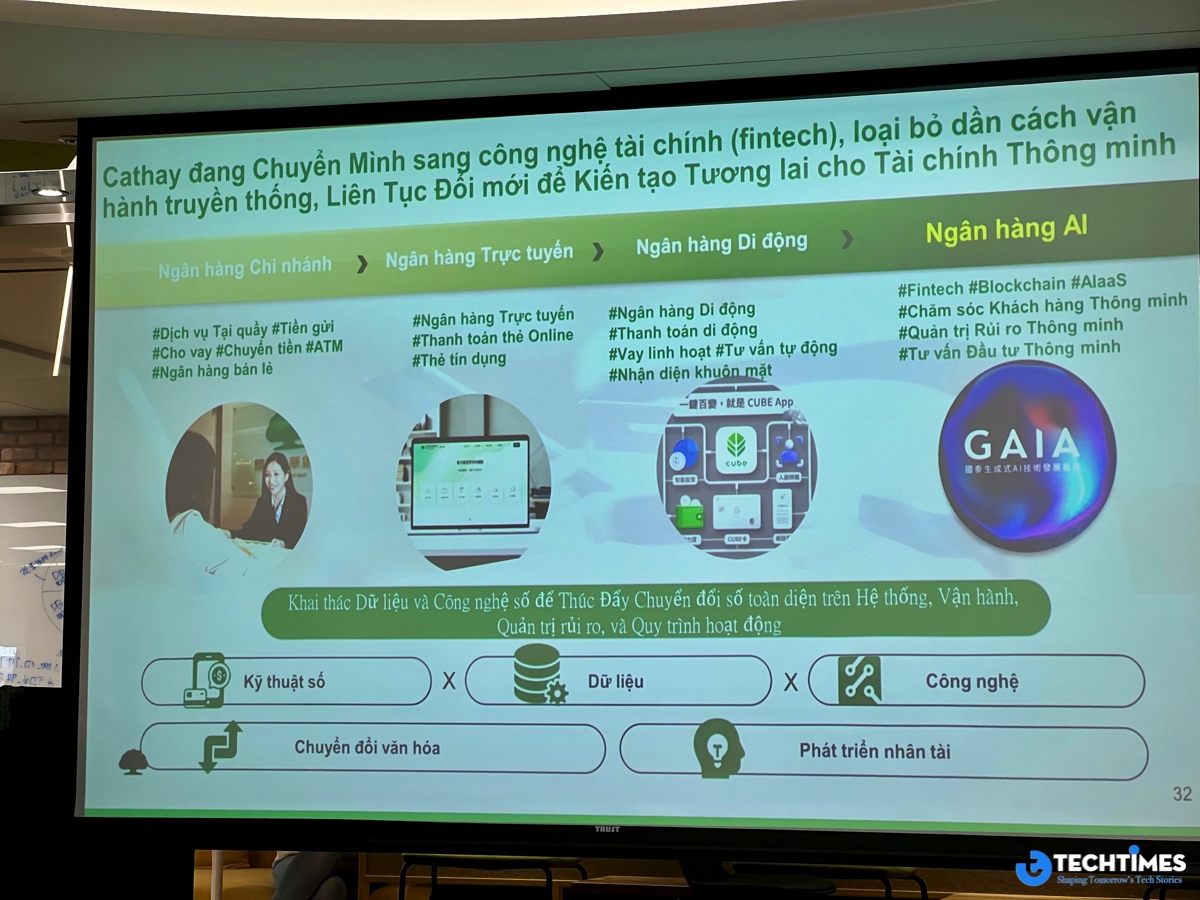
During a visit to Cathay’s headquarters in Taipei, insights from Joe Liang reveal how data and human-centric AI are becoming the core foundations reshaping Cathay’s banking model and driving its expansion across the region, including Vietnam.
During a recent visit to the headquarters of Cathay Financial Holdings in Taipei, a delegation of Vietnamese media had the opportunity to gain rare, first-hand insights into how one of Asia’s leading financial groups is reshaping the future of banking through data and artificial intelligence.
At the center of the discussion was Mr. Joe Liang, Chief Data & Analytics Officer (CDAO) of Cathay United Bank, who offered a deep dive into Cathay’s multi-year digital transformation journey—one that places data not merely as a technological asset, but as the common language guiding every strategic decision across the group.
Mr. Joe Liang, Chief Data & Analytics Officer (CDAO) of Cathay United Bank
Data as the Foundation, Not a Layer of Technology
From the outset, Joe Liang made it clear that Cathay does not view digital transformation as a cosmetic upgrade to traditional banking systems.
“We did not add technology on top of legacy banking,” Liang emphasized. “We rebuilt our operational foundation with data at the core—governance, architecture, decision-making, and culture.”
For Cathay, data is not an afterthought, nor a support function for IT teams alone. It is the structural backbone that informs internal management, risk control, product design, and increasingly, personalized customer experiences across markets.
Liang stressed that without a unified and trustworthy data foundation, artificial intelligence cannot scale safely or effectively.
“If data is fragmented or inconsistent, AI becomes a collection of isolated models rather than a reliable capability. That creates risk—especially in financial services.”
This conviction led Cathay to invest early and heavily in data governance frameworks, shared data architectures, and standardized operating models that span the entire financial group.
A Phased Strategy: From Data to AI at Enterprise Scale
One of the most compelling takeaways for the Vietnamese media delegation was Cathay’s disciplined, phased approach to AI adoption—avoiding hype-driven shortcuts in favor of long-term sustainability.
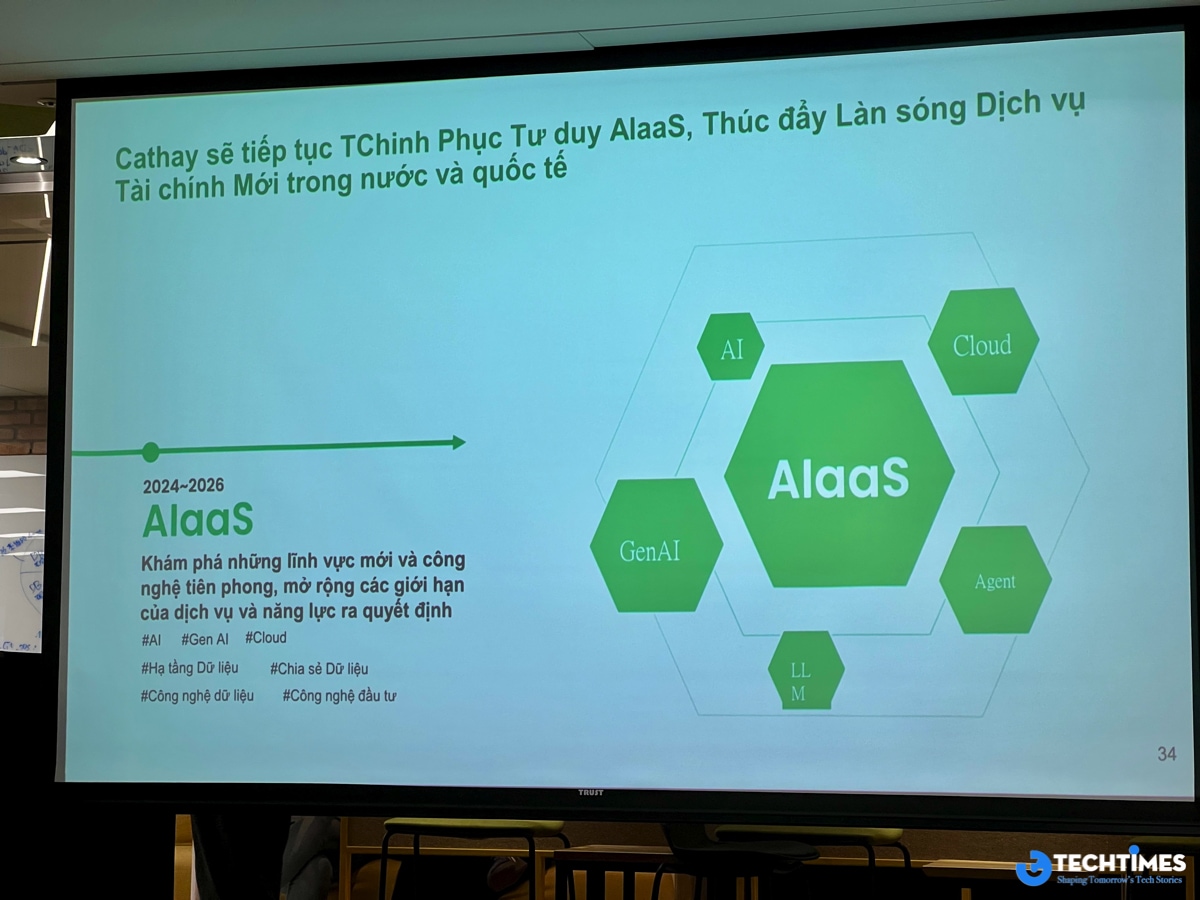
Cathay’s strategy unfolds across three major stages:
Data as a Service (DaaS), launched in 2018, focused on standardizing data, building shared platforms, and dismantling internal data silos.
Cathay as a Service (CaaS), introduced in 2020, expanded the ecosystem through APIs, enabling external partners and platforms to connect with Cathay’s financial services.
AI as a Service (AIaaS), spanning 2024–2026, aims to make AI a reusable, enterprise-wide capability that can be rapidly deployed across business units.
According to Liang, this step-by-step progression allowed Cathay to control risk, maintain data quality, and ensure that AI initiatives remain tightly aligned with business objectives rather than technology trends.
“AI only works at scale when the foundation is right. Otherwise, speed becomes a liability instead of an advantage.”
Human-Centric AI: Empowerment Over Replacement
A recurring theme throughout the session was Cathay’s commitment to human-centric AI—a philosophy that prioritizes augmentation rather than automation for its own sake.
“We do not use AI to replace people,” Liang said. “We use AI to empower them—to free our teams from repetitive tasks so they can focus on higher-value decisions.”
In practice, Cathay has deployed a range of internal AI tools, including enterprise knowledge assistants, no-code and low-code AI platforms for business users, and advanced analytics models supporting credit assessment, risk management, and customer service.
Crucially, every AI deployment operates within a robust system of AI Guardrails, ensuring compliance with privacy, regulatory, and ethical standards—an essential consideration in the highly regulated financial sector.
From Taipei to Southeast Asia: Data as a Regional Growth Engine
Cathay’s data and AI strategy is not confined to Taiwan. The group increasingly views these capabilities as strategic levers for regional expansion, particularly in Southeast Asia, where Vietnam stands out as a key market.
During the visit, Cathay highlighted CUB Vietnam as a leading example of digitally driven banking. The mobile application enables fully online loan approvals in as little as five minutes, powered by eKYC, AI-based fraud detection, and multi-dimensional credit scoring models.
“By combining multi-source data with AI, we can move faster while managing risk more precisely,” Liang explained.
By the end of 2025, the application had recorded 5.7 million downloads, underscoring strong market adoption and validating Cathay’s data-first strategy beyond its home market.
Building a Data Culture: The Hardest Part to Replicate
When asked about the biggest challenge in AI transformation, Liang did not point to technology or budget constraints—but to organizational mindset.
Cathay has invested extensively in internal training, from data literacy programs for senior leaders to hands-on AI courses for non-technical staff. The goal is to embed data-driven thinking across the organization, making analytics a shared language rather than a specialist skill.
“Technology can be purchased. Culture cannot,” Liang noted. “What matters is whether people trust data and are willing to use it in everyday decisions.”
“Cathay AI Express” and a Long-Term Vision
As the session concluded at Cathay’s Taipei headquarters, Liang left the audience with a powerful metaphor:
“Think of this journey as boarding the Cathay AI Express—a train where data and AI don’t just improve banking operations, but help shape the future of financial services.”
The message captured Cathay’s broader philosophy: AI must be deployed responsibly, governed rigorously, yet without stifling innovation. At a time when global banks face mounting pressure to digitize while safeguarding trust and compliance, Cathay’s systematic approach offers a compelling reference model.
For the Vietnamese media delegation, the visit went beyond observing a major financial institution. It offered a clear narrative of where banking is headed: AI is no longer a distant promise, but a core capability being built deliberately—starting with data, guided by leadership, and anchored in human value./.