


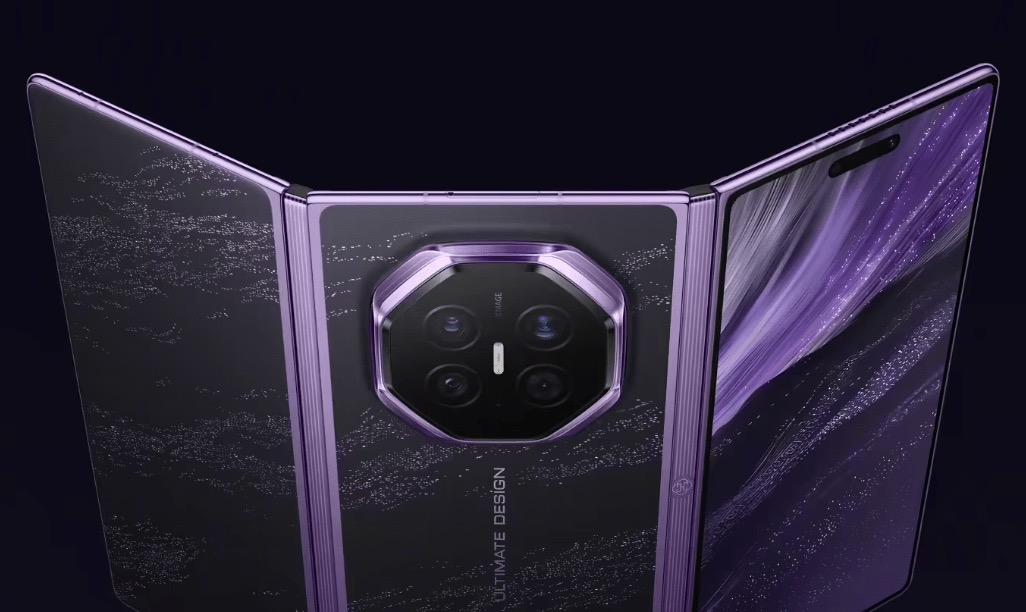
Huawei and Xiaomi have introduced their latest high-end foldable smartphones in China, intensifying competition in the premium segment just days before Apple is expected to unveil its next-generation iPhone lineup. Huawei is also pushing the boundaries of foldable design with a new dual-folding model, while Xiaomi is targeting the ultra-thin, pocket-friendly segment.
Huawei kicked off the latest wave of launches on Monday with its Mate XT2 series, continuing its push into unconventional foldable designs. Unlike conventional book-style foldables, the device can be folded twice, allowing it to transform from a smartphone into a much larger, tablet-like display.
The new generation features Huawei’s Kirin 9050 Pro processor, along with an updated hinge mechanism designed to improve durability. Huawei has also upgraded water resistance and added a privacy display technology intended to make it harder for people nearby to see information on the screen.
Prices start at 19,999 yuan ($2,980) and reach 24,999 yuan ($3,725) for the highest-end configuration. Sales in China are scheduled to begin on September 12.
Huawei Executive Director Richard Yu acknowledged the pressure created by rising component costs, particularly memory, while arguing that the company had continued to invest heavily in new technologies despite those challenges.
Huawei advances its chip architecture
The Mate XT2 also serves as another showcase for Huawei’s efforts to develop high-performance processors despite restrictions on its access to advanced semiconductor technology.
Huawei says the new chip architecture can increase computing performance while reducing power consumption. The design incorporates a technology framework called LogicFolding, which the company has linked to its broader “Tau Scaling Law” research introduced earlier this year.
The strategy reflects Huawei’s continued effort to strengthen its domestic semiconductor capabilities as U.S. restrictions limit its access to certain advanced technologies and components.
Xiaomi targets Apple’s premium segment
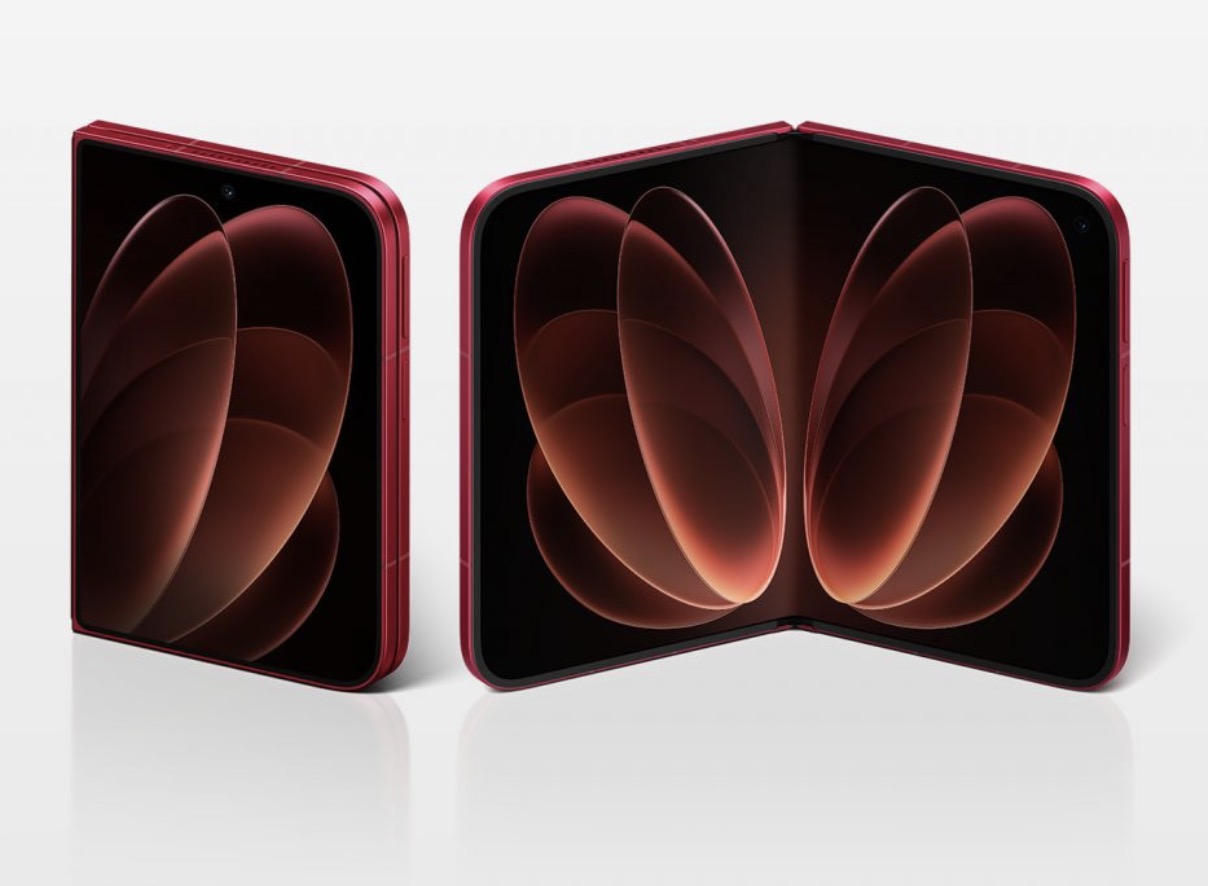
At a separate event, Xiaomi introduced the Xiaomi 18 Fold, positioning it as the company’s most premium foldable smartphone so far.
Xiaomi describes the device as using a “medium-fold” design. When closed, it maintains a compact form roughly comparable to a passport, while opening the display allows users to run three applications side by side.
Xiaomi CEO Lei Jun highlighted the phone’s thin and lightweight construction as one of its key selling points. The device weighs 219 grams and measures approximately 5.02 mm thick when unfolded, according to the company.
The handset is powered by Xiaomi’s proprietary XRing O3 AI processor. Lei claimed that its responsiveness exceeds that of Apple’s A19 Pro chip in certain scenarios.
Xiaomi has also turned to domestic semiconductor suppliers, with the device using DRAM memory produced by Chinese memory manufacturer CXMT.
Pricing for the Xiaomi 18 Fold ranges from 10,999 yuan ($1,540) to 14,999 yuan ($2,100), putting it considerably below Huawei’s latest tri-fold models.
Lei acknowledged that memory remains an expensive component but argued that the Xiaomi 18 Fold offers strong value considering its hardware and design.
Apple enters a critical week for foldables
The timing of the two launches is particularly significant. Apple is scheduled to unveil its latest iPhone generation on Wednesday, with growing expectations that the company could finally enter the foldable smartphone market.
Huawei currently holds a distinctive position in China as the only major smartphone manufacturer offering a commercially available tri-fold device. Its products, however, are not sold in the United States, where the company remains subject to extensive restrictions amid national security concerns raised by Washington.
Samsung remains the world’s largest foldable smartphone manufacturer. The South Korean company introduced its own tri-fold model in December but reportedly ended sales after roughly three months. Samsung subsequently broadened its foldable portfolio in July with a compact, passport-style design.
Huawei maintains a strong lead in China’s foldable market
The latest launches come as Huawei continues to hold a significant position in China’s overall smartphone market.
According to IDC data cited in the report, Huawei accounted for 22.6% of China’s smartphone shipments in the second quarter, ahead of Apple at 18.1%. Xiaomi followed with a 12.4% share.
Huawei’s advantage is even more pronounced in the foldable segment. Research firm Smart Analytics Global estimated that the company accounted for 68% of foldable smartphone shipments in China during the second quarter.
The launches from Huawei and Xiaomi therefore arrive at an important moment for the premium smartphone market. With Apple preparing to reveal its next products, competition is increasingly shifting beyond conventional smartphones toward thinner designs, larger displays, advanced processors and new form factors.
Apple’s upcoming event could determine whether that competition expands into an entirely new phase of the foldable smartphone race.