


Acer Predator Atlas 7 combines Intel Arc G3 performance, a 7-inch 120Hz display, Hall Effect triggers, optional TMR joysticks and an 80Wh battery.
Acer is expanding its Predator gaming handheld lineup with the Predator Atlas 7, a new 7-inch device designed to deliver high-performance PC gaming in a more compact form factor. Its biggest highlight is the Intel Arc G3 platform, which is emerging as a notable option for the next generation of gaming handhelds.
7-inch Full HD display with a 120Hz refresh rate
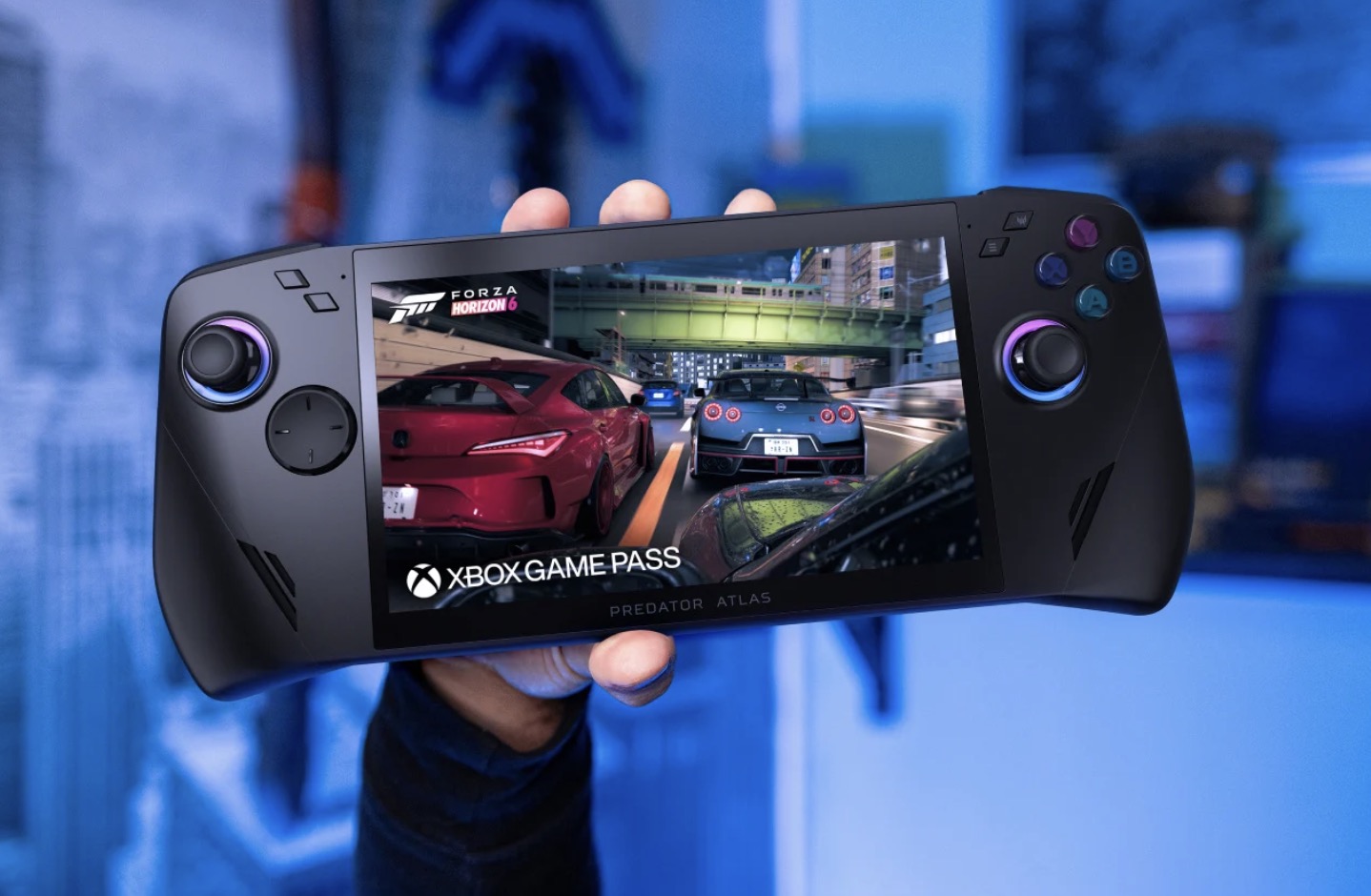
The Predator Atlas 7 features a 7-inch Full HD touchscreen with a 16:9 aspect ratio and a 120Hz refresh rate. The panel reaches up to 500 nits of brightness and supports Variable Refresh Rate (VRR), helping provide smoother gameplay while reducing screen tearing.
The 7-inch form factor also gives the Atlas 7 a distinct position in the handheld gaming market. Many current gaming handhelds have moved toward 8- or 9-inch displays, leaving relatively few options for players who prefer a smaller device.
Acer has carried over several design elements from the larger Predator Atlas 8. The Atlas 7 features contoured grips, an expanded palm-rest area, recessed controls and a textured surface designed to provide a more secure grip during extended gaming sessions.
Intel Arc G3 takes center stage
The hardware platform is arguably the most interesting aspect of the Predator Atlas 7. Acer plans to offer the handheld in multiple configurations based on Intel’s Arc G3 architecture.
The entry configuration combines an Intel Arc G3 Extreme processor with Intel Arc B370 graphics. A higher-end version will pair the Arc G3 Extreme with an Intel Arc B390 GPU, giving users additional graphics performance for demanding games.
Intel’s Arc G3 Extreme platform has already demonstrated its potential in newer gaming handhelds. Previous testing of devices equipped with the processor has shown competitive performance against AMD’s Ryzen Z2 Extreme and AI Z2 Extreme platforms across a range of PC games.
Bringing the same platform to a 7-inch chassis is particularly interesting because it shows that Intel’s latest architecture can be implemented in a considerably smaller handheld design. Acer is effectively balancing high performance with portability rather than simply increasing the size of the device.
Precision controls for handheld gaming
The Predator Atlas 7 also focuses heavily on input accuracy. Its joysticks can be equipped with Tunnel Magnetoresistance (TMR) technology, which is designed to improve precision and responsiveness.
The analog triggers use Hall Effect sensing, allowing them to detect different levels of pressure. This can be useful in games that require fine control over acceleration, braking or other analog inputs.
Combined with the contoured grips and enlarged palm-rest area, the control layout is intended to provide a more stable and comfortable experience during longer gaming sessions.
Dual-fan cooling system
Keeping a powerful processor and GPU running inside a compact handheld requires an effective thermal solution. Acer equips the Predator Atlas 7 with a dual-fan cooling system designed to maintain airflow under sustained workloads.
One of the fans is a metal Predator AeroBlade unit with 89 blades, each measuring just 0.1mm thick. Acer claims the design can increase airflow by up to 10 percent.
A secondary plastic fan works alongside the AeroBlade unit to help move hot air away from the chassis. The combination is intended to improve thermal management when the system is running demanding games for extended periods.
Up to an 80Wh battery
Despite its smaller footprint, the Predator Atlas 7 can accommodate a battery rated at up to 80Wh.
That is a substantial capacity for a 7-inch gaming handheld, particularly considering the power requirements of its Intel Arc-based hardware. Actual battery life will naturally depend on factors such as game workload, display brightness, refresh rate and the selected performance profile.
Still, the large battery gives Acer more flexibility to balance portability with sustained gaming performance.
Coming to North America later this year
Acer plans to launch the Predator Atlas 7 in North America later in 2026. The larger Predator Atlas 8 is scheduled to arrive earlier, with availability expected this month.
With its 7-inch 120Hz display, Intel Arc G3 Extreme processor, Arc B370 or B390 graphics options, Hall Effect triggers, optional TMR joysticks and an up-to-80Wh battery, the Predator Atlas 7 is shaping up to be one of Acer’s more distinctive gaming handhelds.
Its appeal ultimately comes down to more than simply having a smaller screen. The device demonstrates how Acer is attempting to fit Intel’s latest Arc G3 platform into a compact handheld without abandoning the performance-oriented features expected from the Predator brand. Pricing and exact availability will be key factors in determining how competitive the Atlas 7 becomes when it reaches the market.