


NVIDIA has officially unveiled a new family of open artificial intelligence models called Ising, marking a significant step in the effort to transform quantum computing from experimental systems into practical, scalable technologies.
The announcement highlights NVIDIA’s growing ambition to position AI as a foundational layer in the quantum computing stack. Rather than focusing solely on hardware advancements, the company is addressing two of the most persistent bottlenecks in the field: quantum processor calibration and error correction. These challenges have long limited the reliability and scalability of quantum systems, preventing them from handling real-world workloads.
According to NVIDIA, the Ising models deliver substantial performance improvements over existing approaches. In particular, they enable quantum error correction decoding that is up to 2.5 times faster and three times more accurate than traditional methods. At the same time, the models introduce advanced capabilities for calibrating quantum processors, allowing systems to be tuned more efficiently and consistently.
Jensen Huang, founder and CEO of NVIDIA, emphasized the strategic importance of AI in this domain, describing it as the layer that could effectively act as the “operating system” for quantum machines. By integrating AI deeply into quantum workflows, NVIDIA aims to make fragile qubits more stable and usable, ultimately enabling the development of large-scale, reliable quantum-GPU systems.
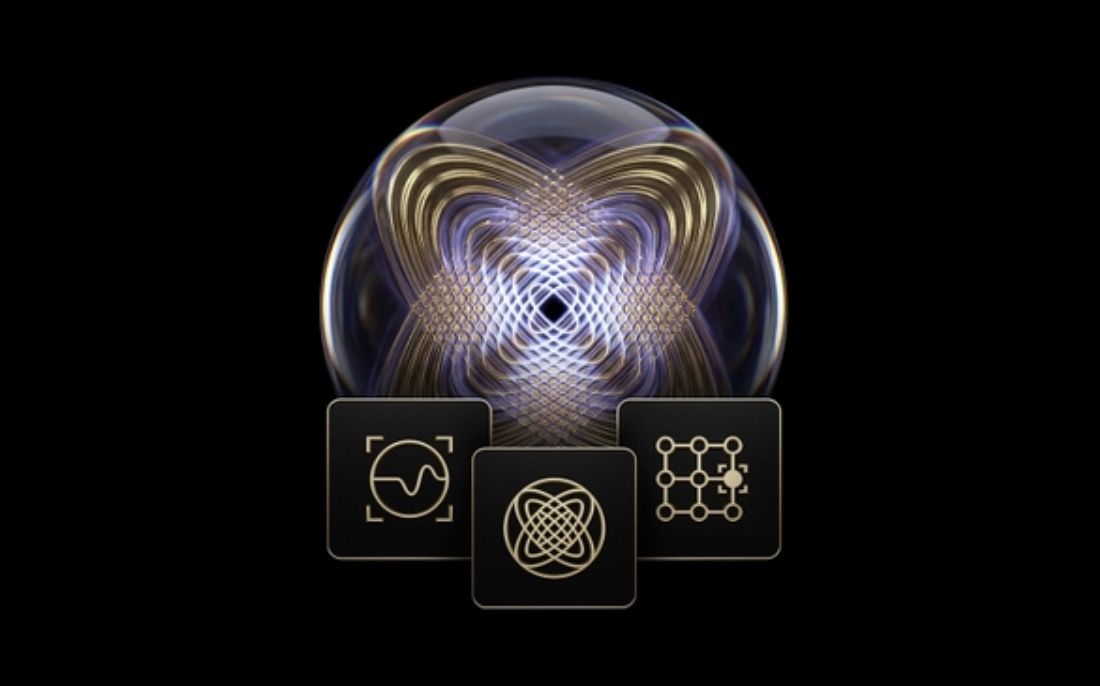
The Ising family includes specialized models designed for distinct tasks within quantum computing. One component focuses on calibration, using a vision-language approach to interpret measurement data from quantum processors and automate tuning processes that previously took days, reducing them to just hours. Another component is dedicated to decoding errors in real time, leveraging advanced neural network architectures to ensure computational accuracy despite the inherent instability of quantum states.
A key aspect of NVIDIA’s strategy is openness. By releasing Ising as an open model family, the company allows researchers and enterprises to build and customize AI tools while maintaining control over their data and infrastructure. This approach is expected to accelerate innovation across the ecosystem, particularly as organizations seek to tailor solutions for specific quantum hardware architectures.
Adoption is already gaining momentum across both academia and industry. Institutions such as Academia Sinica, Fermi National Accelerator Laboratory and Lawrence Berkeley National Laboratory, along with companies like IQM Quantum Computers, are among those exploring the potential of Ising in their quantum research and development efforts. This broad uptake reflects a shared recognition that AI-driven approaches may be essential to overcoming the engineering barriers that have slowed progress in quantum computing.
The new models are designed to integrate seamlessly with NVIDIA’s broader quantum ecosystem, including platforms such as NVIDIA CUDA-Q and interconnect technologies like NVIDIA NVQLink. Together, these tools provide a comprehensive framework for hybrid quantum-classical computing, enabling real-time control, error correction and system optimization.
Beyond the models themselves, NVIDIA is also providing supporting resources, including workflows, training datasets and microservices, to help developers deploy and fine-tune solutions more efficiently. Importantly, the models can be run locally, allowing organizations to protect sensitive or proprietary data.
The launch of Ising comes at a time when the quantum computing market is projected to grow rapidly, with estimates suggesting it could exceed $11 billion by the end of the decade. However, that growth depends heavily on solving core technical challenges—particularly around reliability and scalability. NVIDIA’s latest move signals a belief that AI will be central to that progress.
By bridging AI and quantum computing more tightly than ever before, NVIDIA is not just introducing a new set of tools, but also advancing a broader vision: one in which AI becomes the control layer that unlocks the full potential of quantum technology.