


From Vera Rubin and RTX Spark to Cosmos 3 robotics, NVIDIA unveiled a sweeping vision for a future where autonomous AI agents become a core part of the global digital workforce.
At GTC Taipei 2026, NVIDIA CEO Jensen Huang outlined what may be the next major chapter in artificial intelligence: the rise of Agentic AI. While the past few years have been defined by generative AI models capable of creating text, images, and code, Huang argued that the industry is now moving toward AI systems that can reason, plan, use tools, and perform tasks autonomously.
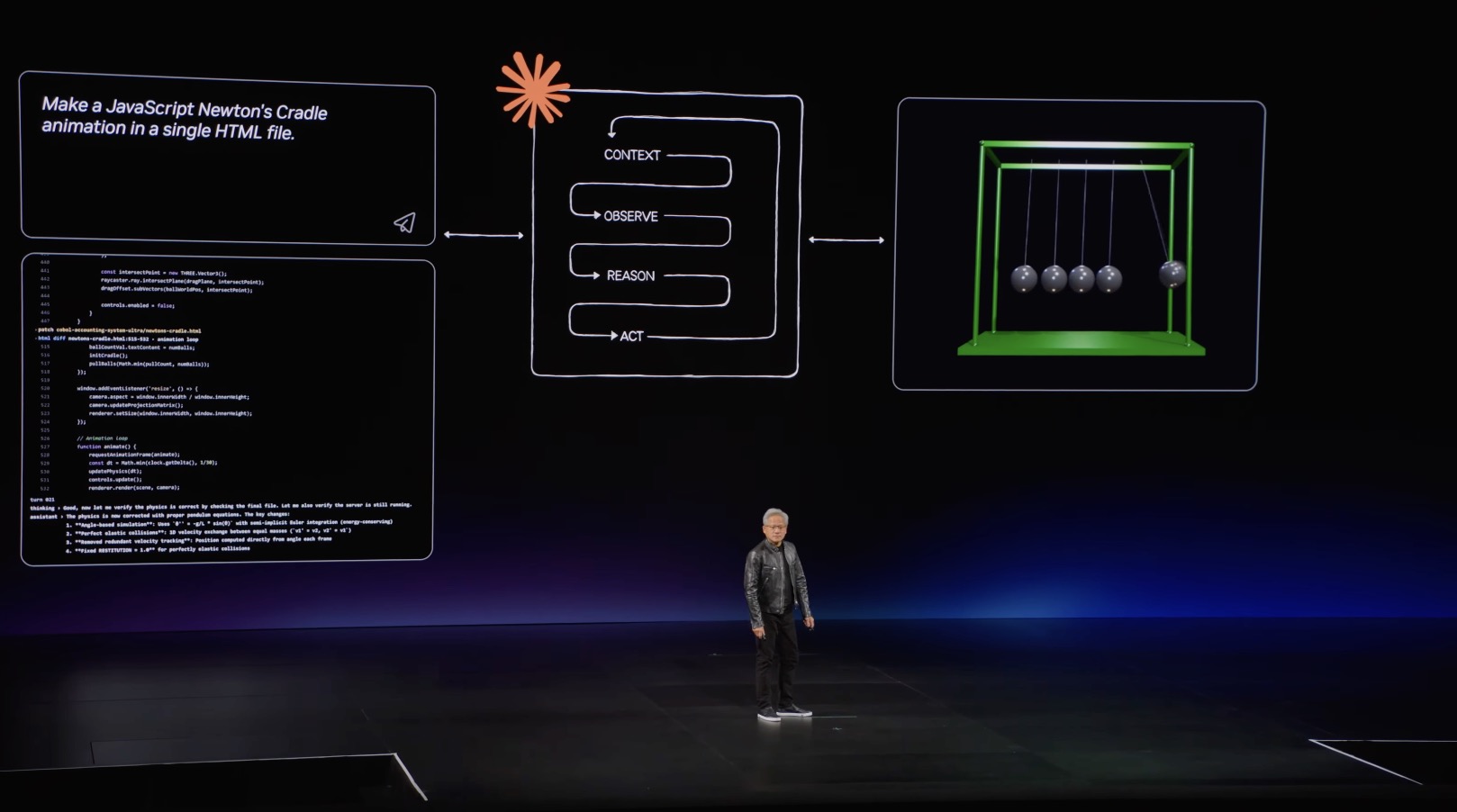
The keynote presented a comprehensive vision spanning data centers, enterprise software, personal computing, and robotics. From the new Vera Rubin AI supercomputing platform to RTX Spark AI PCs and Cosmos 3 for robotics, NVIDIA demonstrated how it intends to build the infrastructure powering the next generation of intelligent systems.
Beyond Generative AI
According to Huang, large language models are no longer the end goal. Instead, they are becoming one component within larger AI systems capable of carrying out complex workflows.
These AI agents can break down tasks into multiple steps, access external data sources, interact with software tools, write and execute code, and continuously refine their outputs. Rather than simply responding to prompts, future AI systems will increasingly function as digital workers capable of completing meaningful tasks with limited human intervention.
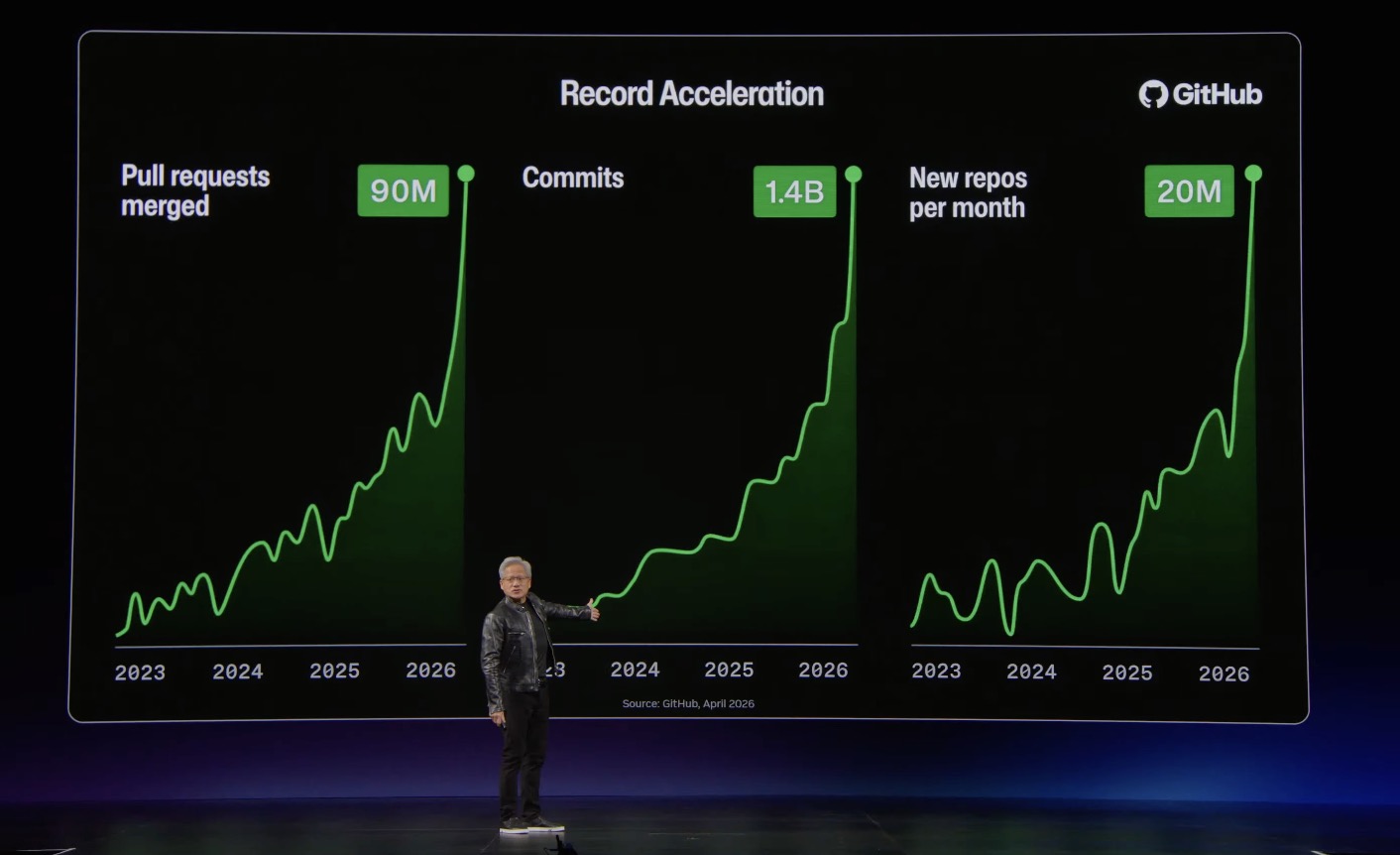
Huang described this transition as one of the most significant technological shifts since the emergence of generative AI, with the potential to unlock substantial productivity gains across industries.
Vera Rubin Enters Production
To support the growing computational demands of Agentic AI, NVIDIA announced that its Vera Rubin platform has entered full-scale production.
Designed as the successor to the Grace Blackwell architecture, Vera Rubin represents a new generation of AI infrastructure optimized for massive-scale inference and agent-based workloads. NVIDIA positions the platform as the foundation for future AI factories – data centers built specifically to train and operate large numbers of AI agents simultaneously.
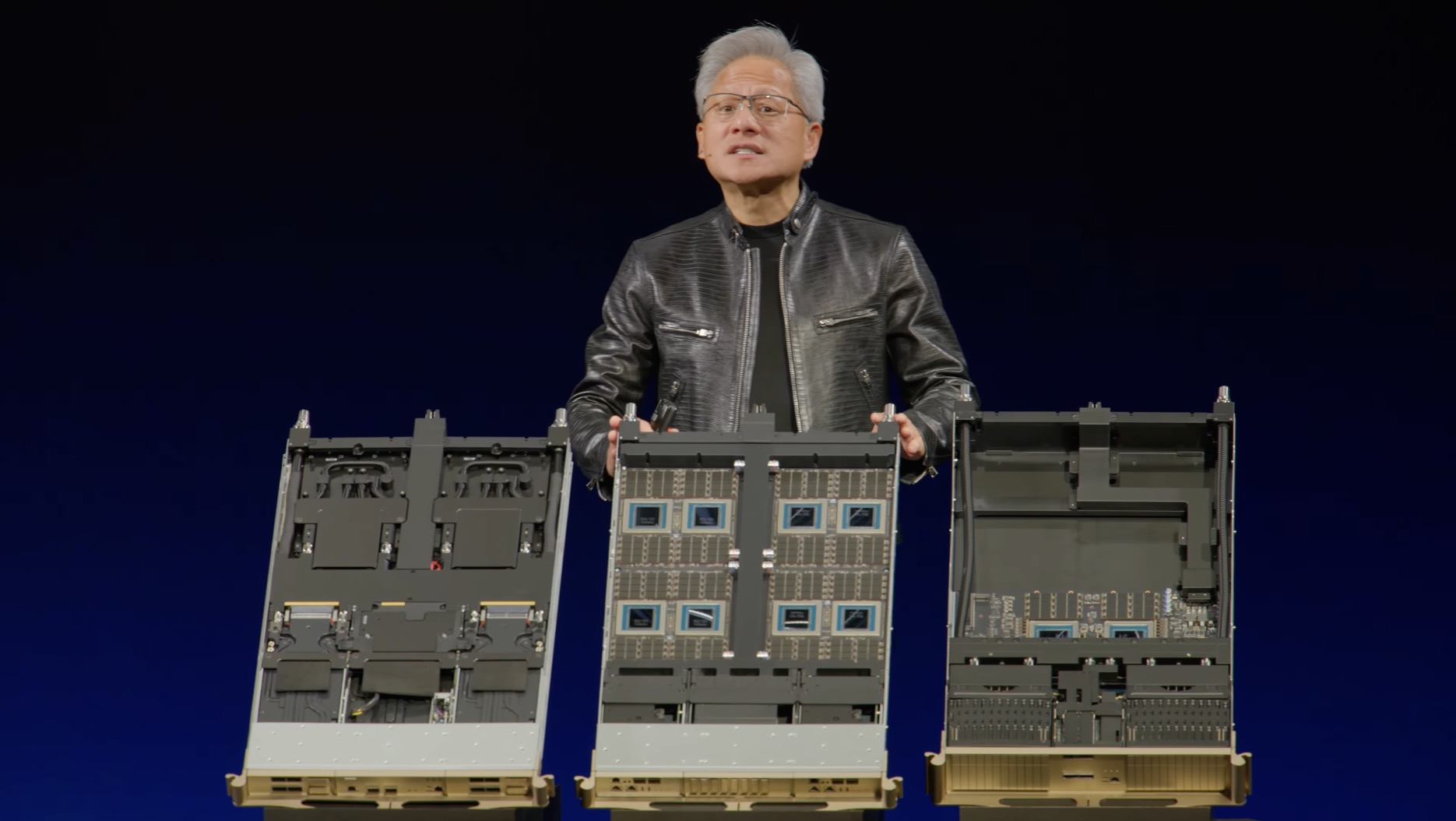
Unlike traditional computing systems, these AI factories are designed around throughput, memory bandwidth, and ultra-fast interconnects, enabling AI models to process increasingly complex reasoning tasks at scale.
The company believes such infrastructure will become essential as enterprises deploy millions of AI agents capable of performing knowledge work alongside human employees.
Vera CPU: Built for AI-Native Computing
One of the most notable announcements during the keynote was the introduction of Vera, NVIDIA’s next-generation CPU architecture.
Huang argued that conventional CPUs were originally designed around human-centric workloads measured in milliseconds, whereas AI agents operate at machine speed and require response times measured in nanoseconds.
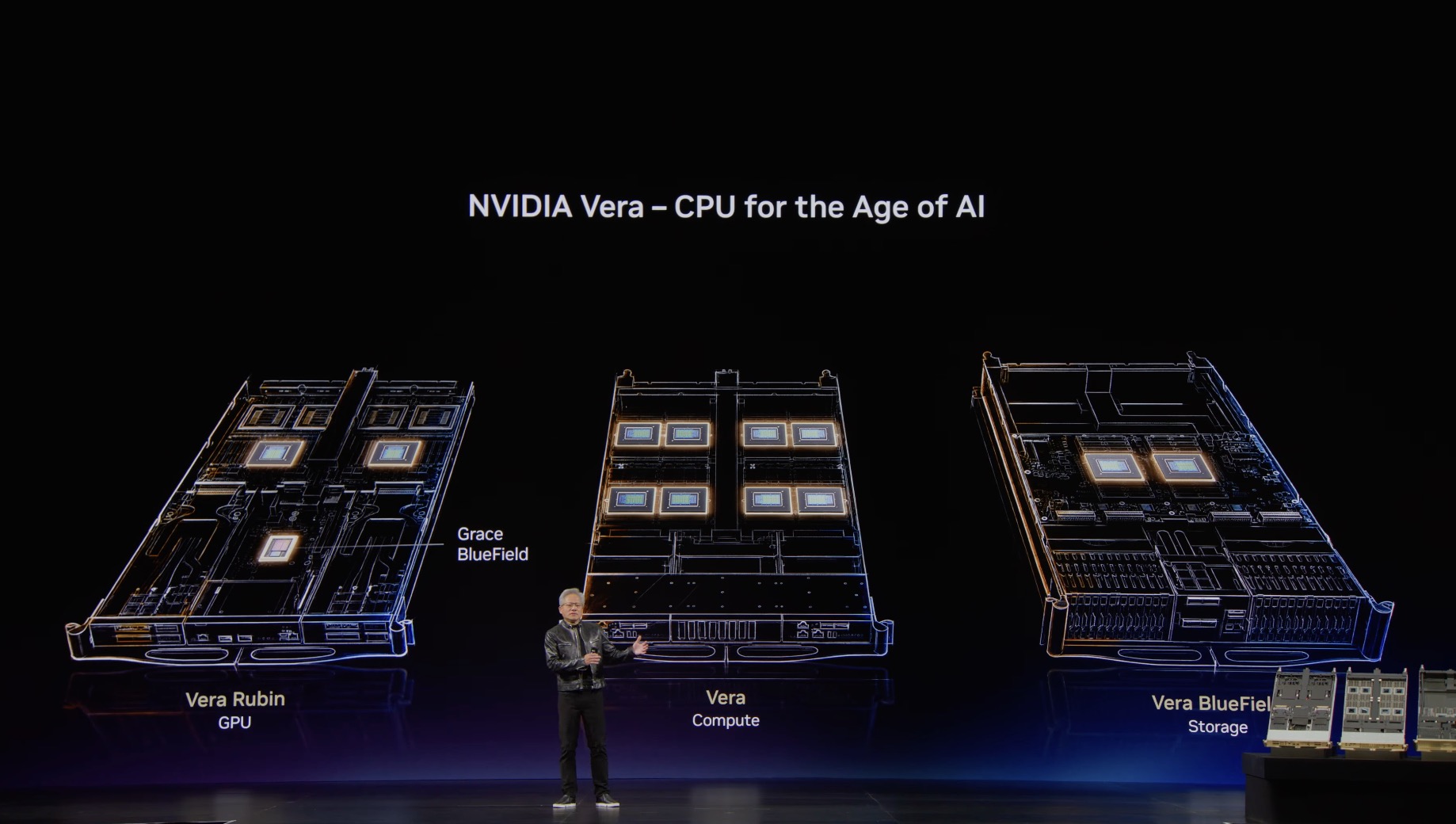
To address this challenge, NVIDIA developed Vera from the ground up with AI workloads in mind. The company claims the processor delivers industry-leading single-thread performance, exceptional energy efficiency, and dramatically increased inter-core bandwidth.
By optimizing CPU performance specifically for AI infrastructure, NVIDIA aims to eliminate bottlenecks that can limit the effectiveness of increasingly powerful GPU accelerators.
Expanding the Enterprise AI Stack
Beyond hardware, NVIDIA also expanded its software ecosystem with new enterprise AI tools and models.
Among the highlights was Nemotron 3 Ultra, a hybrid AI model combining State Space Models (SSM) with Mixture of Experts (MoE) architecture. NVIDIA says the approach significantly improves inference speed while reducing operating costs, making it more practical for large-scale enterprise deployments.
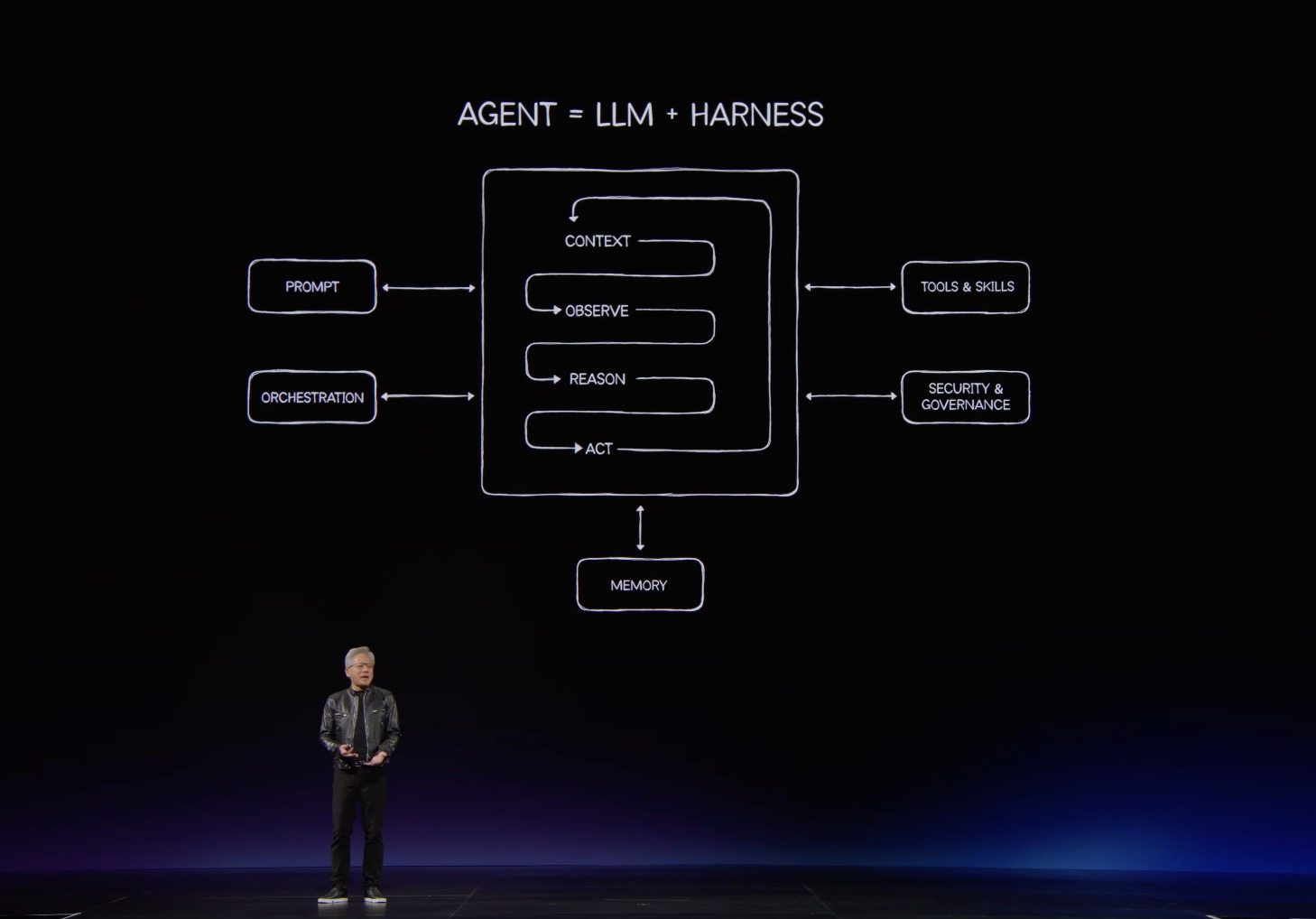
The company is increasingly positioning itself as a full-stack AI provider, offering not only computing hardware but also software frameworks, pretrained models, orchestration tools, and deployment platforms.
This strategy reflects growing enterprise demand for complete AI solutions rather than standalone components.
RTX Spark Reimagines the Personal Computer
Huang also introduced RTX Spark, a new AI-focused PC platform developed in collaboration with Microsoft.
The initiative reflects NVIDIA’s belief that AI agents will eventually operate directly on personal computers rather than relying exclusively on cloud infrastructure. RTX Spark combines Arm-based processing, Blackwell graphics technology, and unified memory architecture to support local AI workloads around the clock.
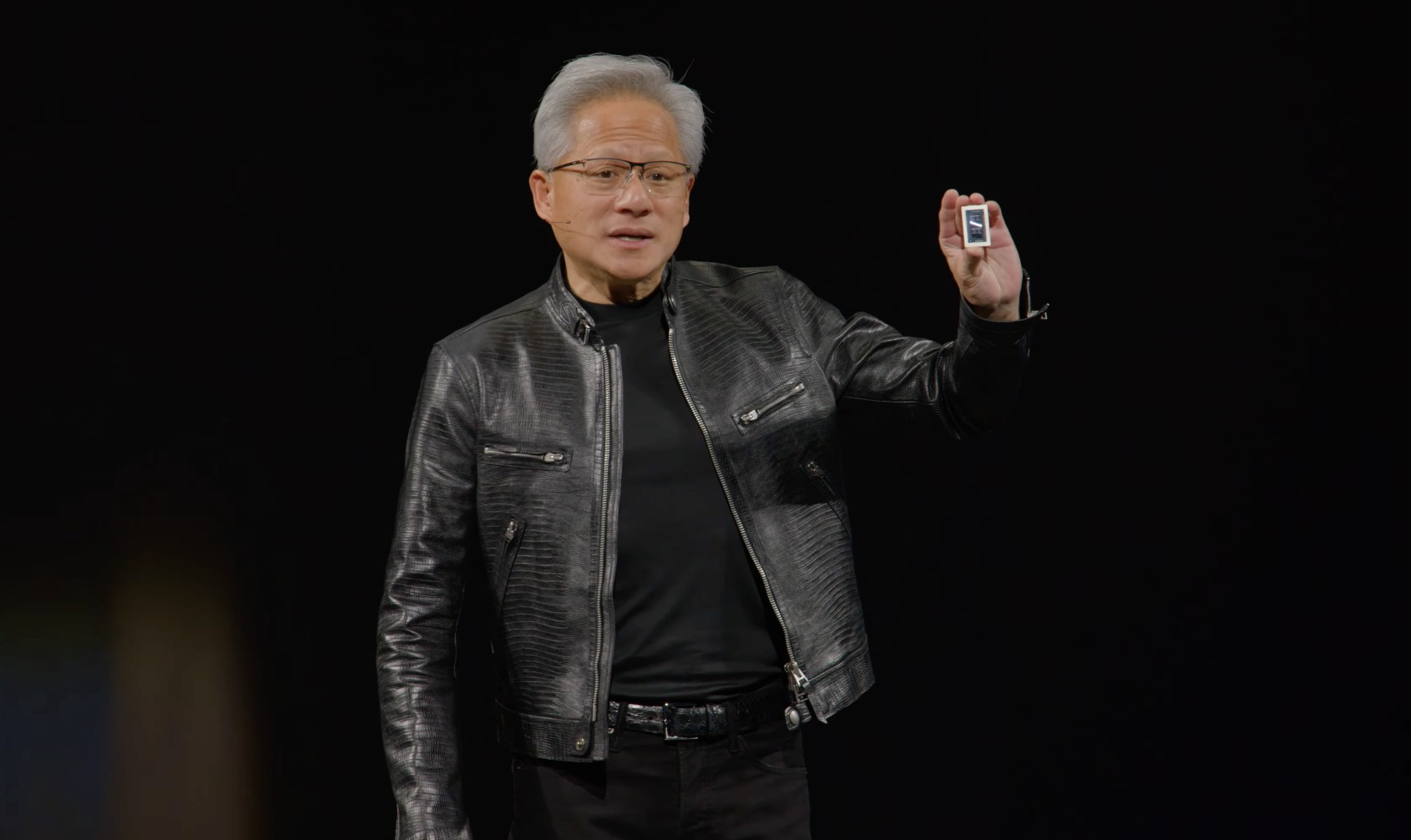
According to NVIDIA, the platform is designed to enable users to run sophisticated AI models and personal AI agents directly on their devices while minimizing latency, privacy concerns, and cloud-related costs.
The launch represents one of NVIDIA’s most ambitious moves into the personal computing market and signals a broader industry shift toward AI-native PCs.
Cosmos 3 and the Rise of Physical AI
While Agentic AI focuses on digital environments, NVIDIA believes the next frontier lies in the physical world.
To support this vision, the company unveiled Cosmos 3, a foundation model designed for robotics and autonomous systems. Cosmos 3 enables machines to understand and interact with real-world environments through visual perception, spatial awareness, and contextual reasoning.
The technology is expected to play a key role in future humanoid robots, autonomous vehicles, and industrial automation systems.
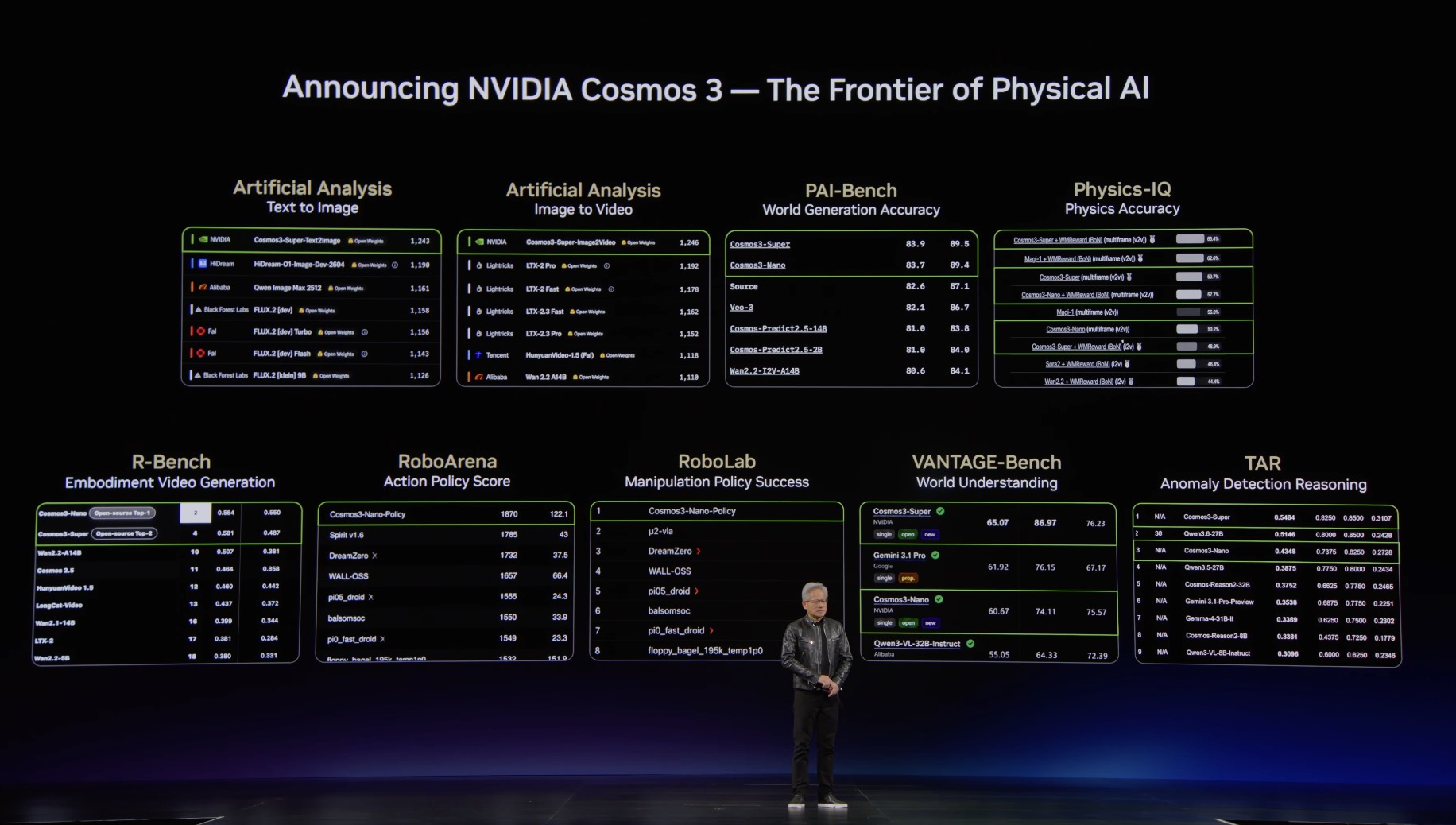
For NVIDIA, Physical AI represents the convergence of artificial intelligence, simulation, robotics, and advanced computing infrastructure – a market opportunity that could ultimately rival today’s cloud AI sector.
Building the Infrastructure of the AI Economy
Taken together, the announcements at GTC Taipei 2026 reveal a broader strategic transformation underway at NVIDIA.
The company is no longer positioning itself solely as a GPU manufacturer. Instead, it aims to become the foundational infrastructure provider for the emerging AI economy.
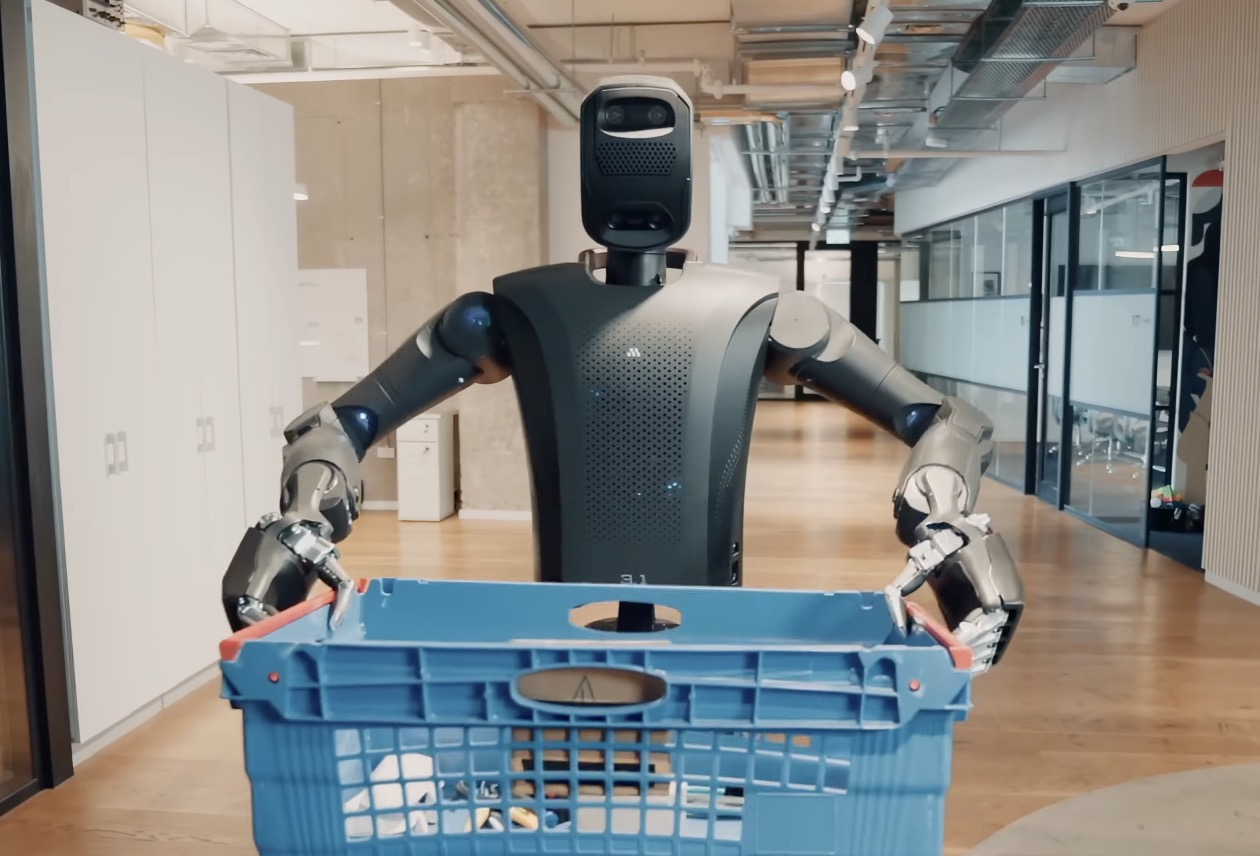
From Vera Rubin in the data center and Vera CPUs for AI workloads to RTX Spark PCs and Cosmos 3-powered robots, NVIDIA’s roadmap reflects a future in which AI systems move beyond content generation and become active participants in digital and physical work.
If generative AI marked the beginning of the AI revolution, Jensen Huang’s vision suggests that Agentic AI may define its next and potentially most transformative – phase.