


As the world accelerates into the era of Artificial Intelligence (AI) and High-Performance Computing (HPC), a fundamental physical constraint is becoming increasingly visible: heat.
When AI and HPC turn heat into a bottleneck
As Artificial Intelligence (AI) and High-Performance Computing (HPC) scale at an unprecedented pace, the industry is running into a fundamental physical constraint: heat.
The latest generation of GPUs and accelerators are pushing power density to levels that traditional thermal approaches struggle to manage. In hyperscale data centers, where thousands of chips operate continuously, thermal limits are no longer secondary considerations – they directly cap performance, efficiency, and system reliability. The same constraint is increasingly visible in electric vehicles (EVs), advanced networking systems, and compact consumer electronics, where thermal failure can translate into reduced lifespan or degraded user experience.
In this environment, thermal management is no longer a supporting function. It has become a strategic capability – one that determines whether next-generation computing systems can scale at all.
This shift raises a deeper question: if heat is now a bottleneck, what does it take to manage it effectively at scale?
From material innovation to precision manufacturing
For years, the industry’s answer centered on materials. Copper, aluminum, and increasingly sophisticated thermal interface materials (TIM) were seen as the primary levers of performance. But as thermal requirements intensify, the limits of this approach are becoming clear.
Today, performance is no longer defined by material specifications alone. It depends on how precisely those materials are manufactured, controlled, and deployed in real-world applications.
This is where advanced thermal products such as vapor chambers and thermal pads become critical – not just as components, but as proof points of a deeper industrial shift.
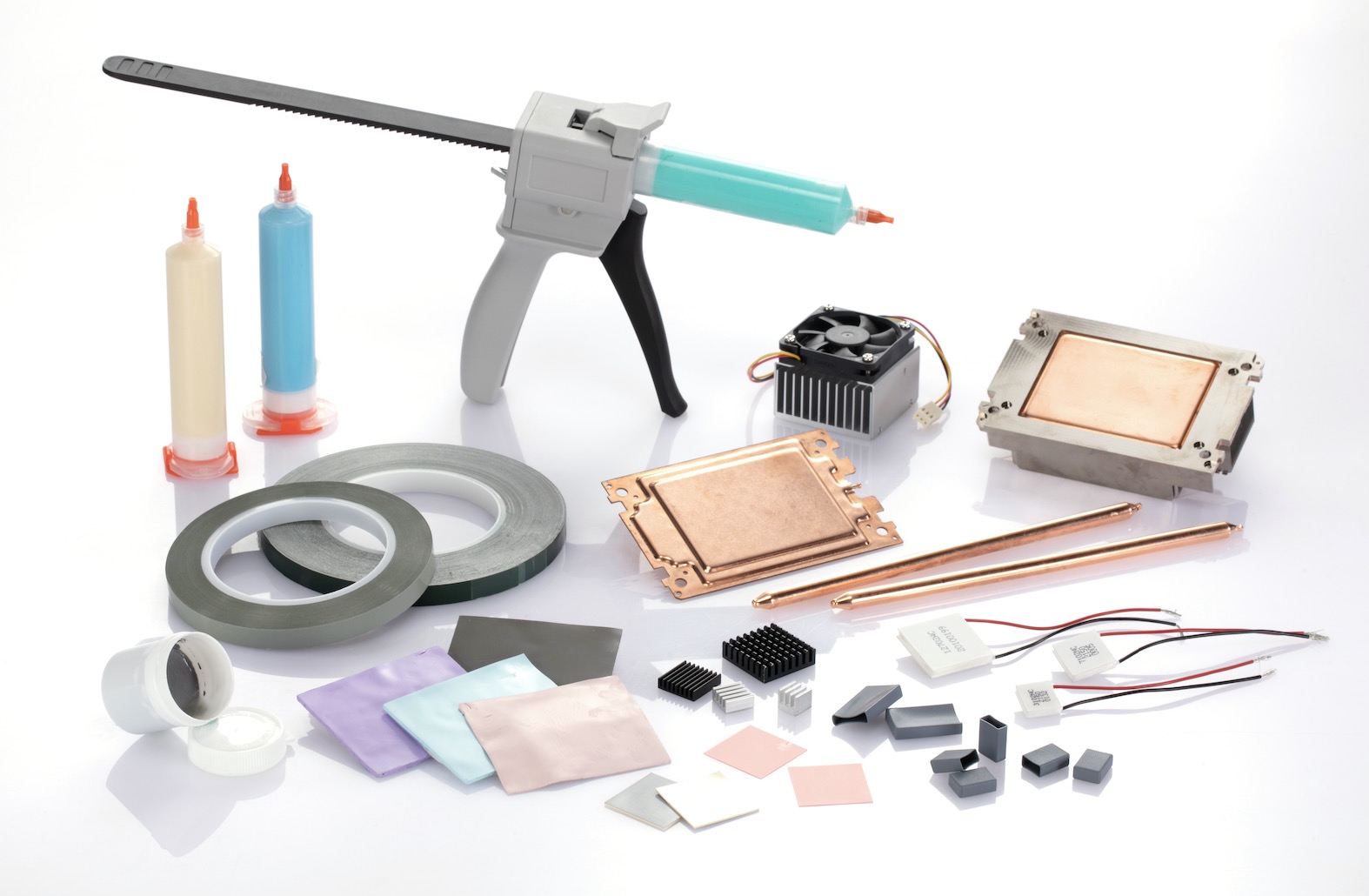
Vapor chambers, for instance, rely on phase-change heat transfer, where liquid evaporates and condenses within a sealed structure to distribute heat efficiently. However, their real-world performance depends on manufacturing precision at the microstructural level. The design and consistency of the wick structure, the exact volume and distribution of the working fluid, and the integrity of the sealed chamber must all be tightly controlled. Even minor deviations can significantly impact thermal performance or long-term reliability.
Thermal pads present a different but equally demanding challenge. They must maintain a precise balance between thermal conductivity, compressibility, and mechanical stability, ensuring consistent contact across uneven surfaces. At scale, this requires highly controlled production processes to guarantee uniformity across thousands or millions of units.
These products make one thing clear: the industry is no longer competing on materials alone. It is competing on manufacturing capability, process stability, and the ability to deliver consistent performance at scale.
Which leads to the next question – if thermal performance now depends on precision manufacturing, where should that manufacturing take place?
Why the market now demands both precision and proximity
As thermal solutions become more complex, customer expectations are evolving just as rapidly.
It is no longer sufficient to deliver high-performance components. Customers – particularly OEMs and system integrators – now require speed, flexibility, and proximity. Product cycles are shortening, design iterations are increasing, and thermal solutions often need to be customized for specific architectures.
In this context, the ability to respond quickly – to prototype, test, adjust, and scale – becomes just as important as technical excellence.
This dual requirement – precision and proximity – is reshaping manufacturing strategy.
Companies need production bases that can maintain advanced manufacturing standards while remaining close to major electronics ecosystems. Distance introduces delays, limits collaboration, and reduces responsiveness. In contrast, proximity enables faster iteration, tighter integration with customers, and more resilient supply chains.
It is within this framework that Vietnam is emerging – not simply as an alternative manufacturing location, but as a strategic solution to this dual challenge.
With its growing industrial capabilities, established electronics ecosystem, and geographic position near key Asian manufacturing hubs, Vietnam offers a rare combination: the ability to support high-precision production while enabling regional responsiveness.
For thermal manufacturing, where both factors are critical, this combination is increasingly decisive.
T-Global’s Vietnam facility as a strategic answer
T-Global’s expansion into Vietnam should be understood within this broader industry shift.
Rather than a conventional capacity increase, the company’s new facility represents a strategic response to the evolving demands of thermal manufacturing – where precision must be matched with proximity.
“In today’s environment, thermal performance depends not only on engineering, but on how quickly and reliably solutions can be delivered,” a T-Global representative noted. “Our Vietnam facility allows us to align manufacturing more closely with customer needs, both technically and geographically.”
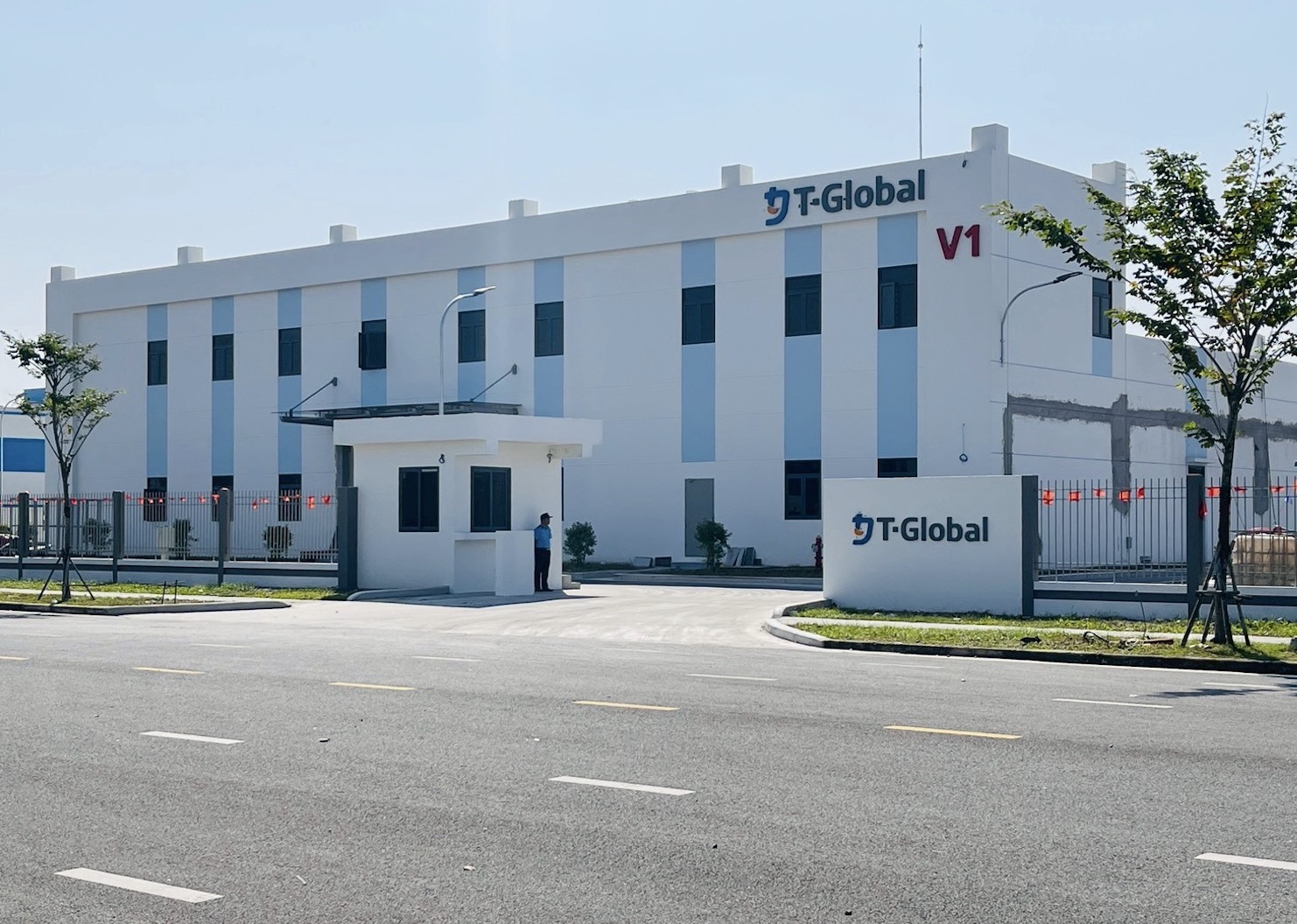
By establishing production in Vietnam, T-Global brings its manufacturing capability closer to the center of demand in Asia, where a significant share of global electronics production is concentrated. This proximity enables faster development cycles, more effective collaboration with customers, and improved responsiveness to changing requirements.
At the same time, the facility is designed to uphold the high standards required for advanced thermal products. The ability to manufacture vapor chambers and thermal pads consistently in Vietnam is not just a matter of scale – it is a demonstration that complex, precision-driven processes can be successfully replicated and maintained in a new production environment.
This is a critical capability.
Vapor chambers require rigorous control over internal structures and airtight sealing. Thermal pads demand uniform material properties across large volumes. Achieving stable production of these products in Vietnam signals that T-Global has effectively transferred and localized its advanced manufacturing expertise.
In doing so, the company is not only expanding capacity, but building a more flexible and resilient supply chain – one that can adapt to both technical challenges and market dynamics.
Looking ahead: manufacturing as a competitive advantage
As AI continues to expand across cloud and edge environments, thermal requirements will only become more demanding.
Future systems will require increasingly customized solutions, developed in closer collaboration between suppliers and customers. This will place greater emphasis on manufacturing systems that are not only precise, but also agile and regionally integrated.
In this context, engineering alone is no longer enough.
Competitive advantage will increasingly come from the ability to combine technical expertise with localized, responsive manufacturing – enabling faster iteration, closer collaboration, and more reliable delivery.
T-Global’s Vietnam facility represents a step toward this model.
It provides a platform for the next phase of thermal innovation, where manufacturing is not just an operational function, but a strategic asset.
Conclusion: Redefining value in the AI era
As the AI era pushes hardware to its physical limits, thermal management is emerging as a defining factor in system performance.
And within this domain, the center of gravity is shifting – from materials to manufacturing, from scale to responsiveness, and from global distance to regional proximity.
Vietnam’s role in this shift is not incidental. It reflects a broader realignment of where and how advanced manufacturing takes place.
For T-Global, the move into Vietnam is more than expansion. It is a repositioning – one that aligns manufacturing capability with the evolving demands of a rapidly changing industry.
>> Explore T-Global’s thermal solutions: https://www.tglobalcorp.com/products/