






A study by Unemployment Labs indicates that open‑weight language models from DeepSeek, Moonshot AI and others were trained on Nvidia’s Blackwell GPUs, which are prohibited from export to China.
Washington has placed strict limits on the sale of its most powerful AI accelerators to China, targeting Nvidia’s Blackwell series. The chips are barred from direct shipments to Chinese firms or any entity owned by the Chinese state.
Instead, the U.S. permits Nvidia to ship the less powerful H200 GPU through indirect routes, applying a 25% tariff on each consignment. The policy aims to preserve America’s lead in artificial‑intelligence research while curbing Beijing’s access to cutting‑edge hardware.

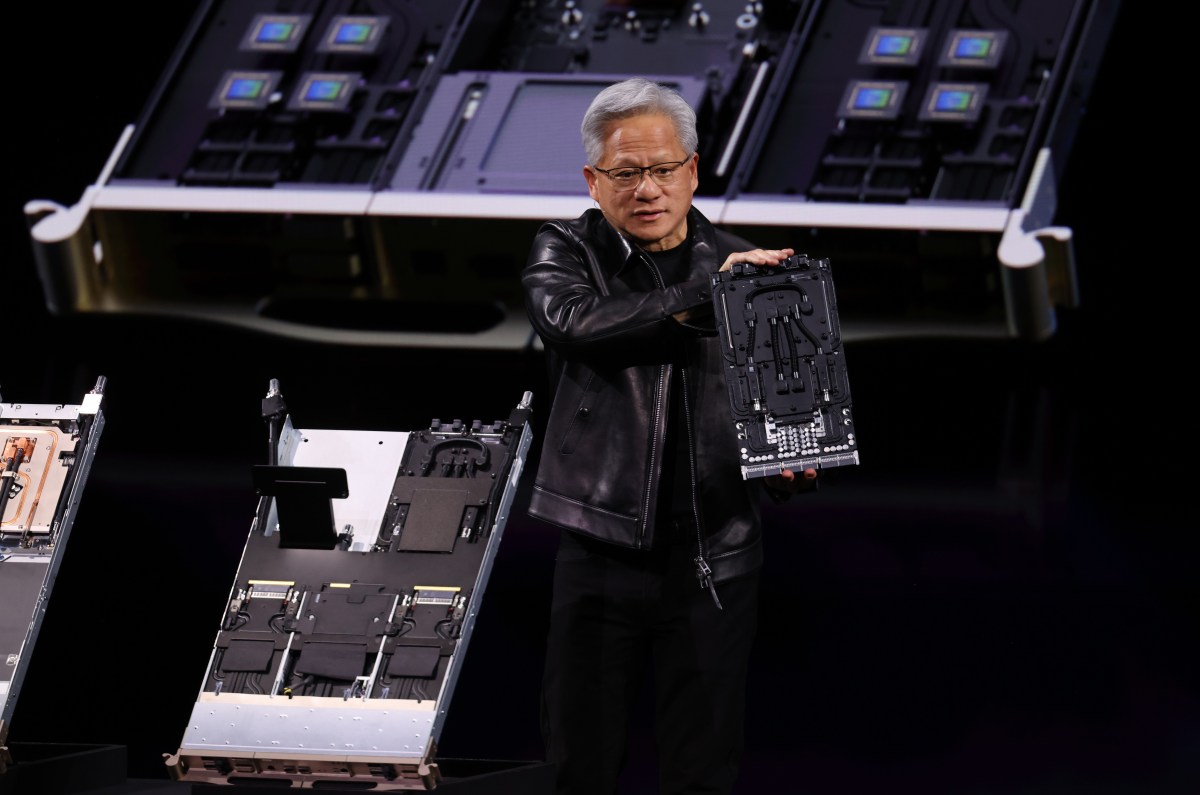
Will DePue, a former OpenAI researcher now heading the nonprofit Unemployment Labs, examined the weight matrices of several publicly released large‑language models from DeepSeek, Moonshot AI, MiniMax and Ant Group. The investigation found that models such as Moonshot’s Kimi K3 and DeepSeek’s V4 exhibit distinctive patterns consistent with training on Blackwell GPUs.
The methodology compares the statistical distribution of model weights with the known architecture of the Blackwell chip, allowing researchers to infer the underlying hardware. DePue described the evidence as “compelling,” noting that none of the examined models appear to have been trained exclusively on alternative processors.
White House technology adviser Michael Kratsios earlier this year cited U.S. intelligence sources confirming that Moonshot AI used export‑banned Nvidia chips. Parallel estimates from the nonprofit Epoch AI suggest roughly two million advanced AI chips entered China in 2024‑2025 via covert channels.
Epoch also reported that 275,000 Nvidia AI accelerators were imported into Malaysia during the same period, highlighting a growing trend of Chinese firms establishing offshore data centres to bypass export restrictions.
Megaspeed, led by Alice Huang – the former spouse of Nvidia CEO Jensen Huang – has been under investigation by U.S. and Singaporean authorities for allegedly funneling banned Nvidia chips to a Shanghai data centre. Bloomberg disclosed that Megaspeed’s subsidiary Speedmatrix played a key role in the smuggling operation.
Jensen Huang’s recent departure from Nvidia followed revelations of personal ties with Alice Huang and raised questions about the company’s exposure to potential export‑control violations. Both Nvidia and Huang have asserted that they visited Megaspeed facilities to verify their legitimacy.
Experts such as Sam Bresnick of the Georgetown Center for Security and Emerging Technology argue that allowing Chinese firms to source chips via Malaysian data centres undermines the intent of the export bans, as the computational power remains effectively accessible.
Conversely, Stanford researcher Graham Webster cautions that withholding chips may not spur domestic Chinese production, given the sheer scale of demand. With an estimated 600,000 H200 units stockpiled in Hong Kong awaiting clearance, the market impact on Nvidia could be substantial if the bans remain in place.
TechTimes Perspective
TechTimes believes the episode exposes a systemic weakness in the United States’ ability to enforce export controls on high‑performance AI hardware. If smuggling routes through Malaysia and Singapore continue unchecked, Nvidia could face legal exposure and a loss of revenue from the Chinese market, while Vietnamese AI startups may find access to top‑tier GPUs increasingly restricted, potentially slowing local innovation.