





Apple has partnered with OpenEvidence to launch a health‑focused AI research app, inviting up to 200,000 U.S. users with iPhone 15 or newer to participate for more than a year.
Apple announced a new research application in collaboration with health‑oriented AI firm OpenEvidence. The app is limited to U.S. residents over 21 who own an iPhone 15 or later, run iOS 26, and have Apple Intelligence enabled. Apple aims to enroll as many as 200,000 participants and keep the study active for over 12 months.
Participants can ask medical questions and receive answers sourced from peer‑reviewed literature such as The New England Journal of Medicine, the Journal of the American Medical Association and Nature. The app lets users rate the usefulness of each response, submit feedback, and complete monthly surveys to enrich the data set.

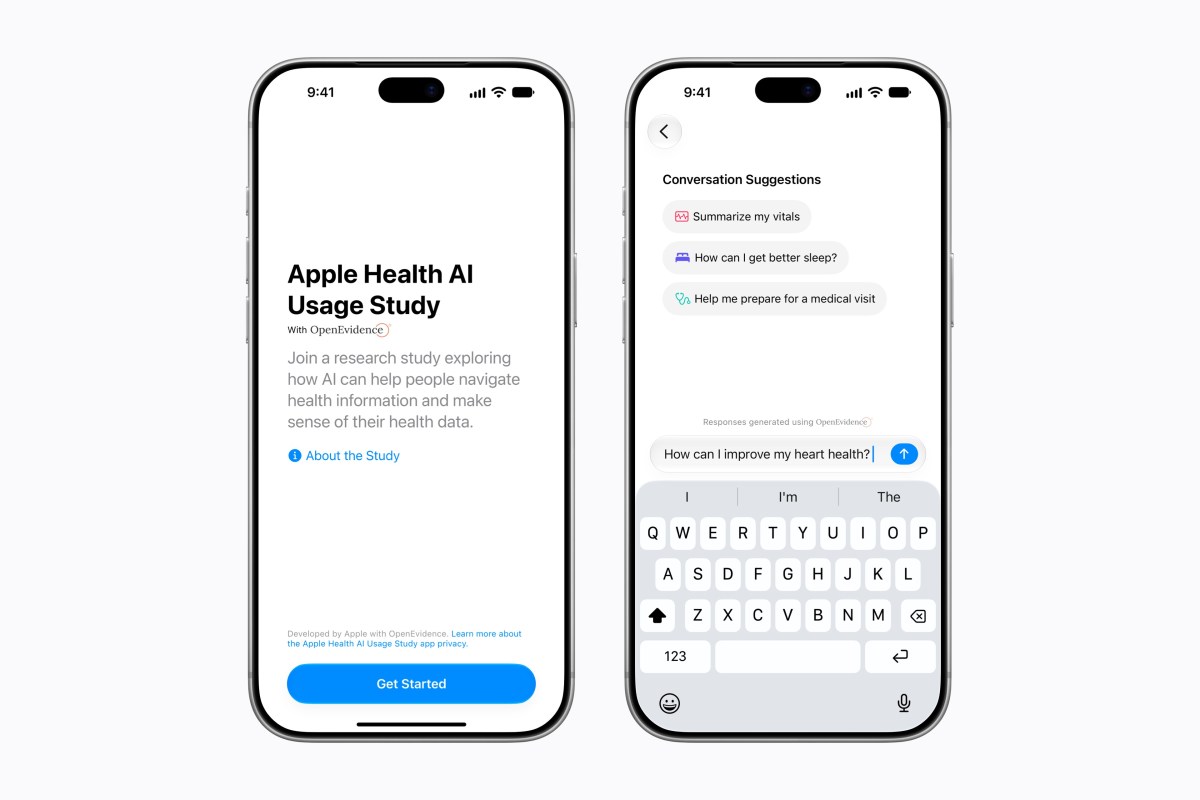
When users opt in, HealthKit data—including resting heart rate, activity levels, sleep patterns and lab results—are shared to generate personalized suggestions. Apple says the tool can help users prepare for doctor visits and direct them to appropriate providers for serious concerns.
Apple emphasizes that all data are anonymized before being sent to a secure third‑party cloud and will not be used to train any AI models. OpenEvidence deletes query and response data after 24 hours. "At Apple, we believe responsible innovation starts with scientific rigor and clinical grounding," said Sumbul Desai, Apple’s vice president of Health and Fitness.
TechTimes Perspective
TechTimes believes Apple’s health‑AI study could set a new benchmark for clinically grounded artificial intelligence in consumer devices. By gathering real‑world usage data and user feedback under controlled conditions, Apple can evaluate the feasibility of embedding AI‑driven medical advice into its existing health ecosystem, such as the Health app or Siri. Positive outcomes may accelerate a broader rollout, influencing industry standards for privacy, data handling and evidence‑based AI in personal health.