





OpenAI announced a new classifier that can more accurately detect AI‑generated child sexual abuse material, cutting false positives by 48 % and flagging abusive content twice as often.
At a press briefing in Washington, D.C., OpenAI introduced a classifier designed to identify child sexual abuse material (CSAM) that is generated by artificial‑intelligence tools.
The company will provide free access to vetted NGOs and law‑enforcement agencies, and it plans to offer technical guidance for developers seeking to detect synthetic CSAM.


OpenAI reports that the classifier cuts false‑positive alerts by 48 % compared with its previous system, easing the burden on human reviewers.
Images that the model does flag are twice as likely to contain abusive content, according to internal testing.
For the first time, the tool includes a dedicated flag that distinguishes between real‑child imagery and AI‑generated depictions, helping investigators prioritize cases.
Early results suggest the reduced noise could shorten the time NCMEC and partner agencies spend triaging reports, though the classifier is still being evaluated in real‑world settings.
The National Center for Missing & Exploited Children’s CyberTipline received 400,000 AI‑related CSAM reports in 2025, up from 67,000 in 2024, a surge officials describe as “explosive.”
North Carolina Attorney General Jeff Jackson warned that unchecked growth could cripple the tipline’s mission, while Congress considers tighter regulations such as the Take It Down Act.
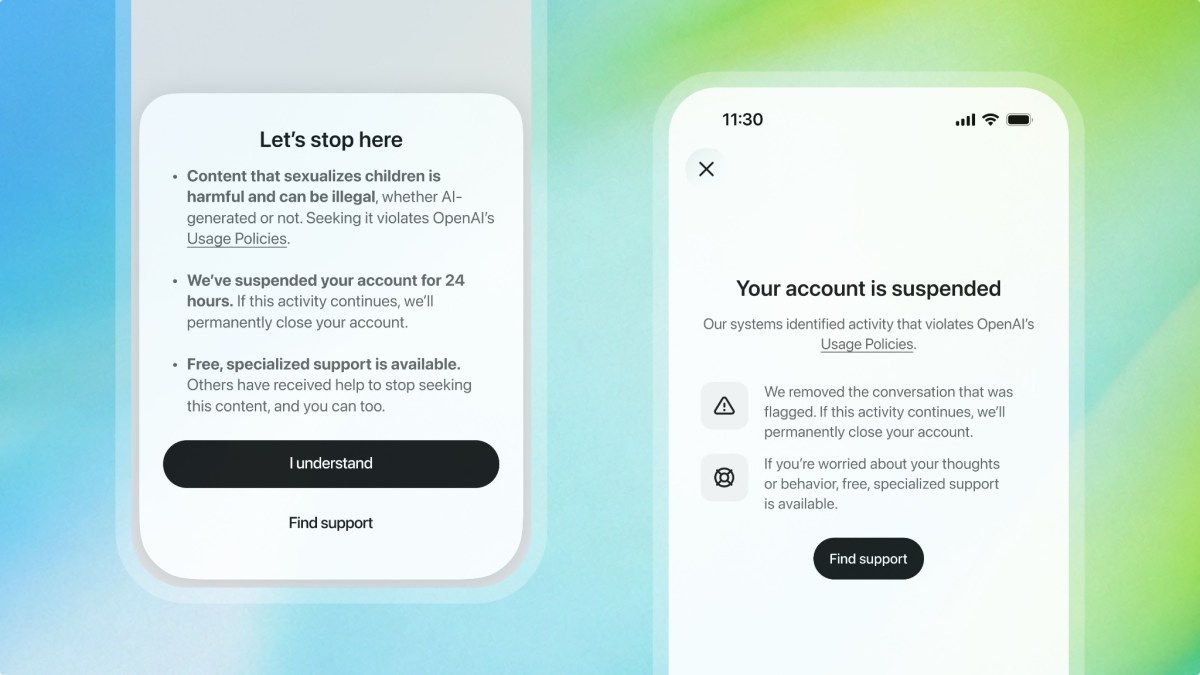
OpenAI also updated ChatGPT with a warning that appears when users request prohibited content, followed by a 24‑hour account pause for a first offense.
The pause is coupled with links to help resources, and the company says it will report every CSAM instance to NCMEC as part of its broader mitigation strategy.
TechTimes Perspective
TechTimes believes OpenAI’s classifier marks a significant step toward managing the flood of AI‑generated CSAM that threatens child‑protection hotlines. By halving false‑positive alerts and adding a specific AI‑synthetic flag, the tool could make triage more efficient for NCMEC and law‑enforcement partners. However, its effectiveness will depend on widespread adoption by platforms and NGOs, and on continued regulatory pressure to enforce reporting standards. The move also signals that AI firms are beginning to share mitigation technology rather than only defending their models, a trend that may shape future industry‑government collaborations on harmful content.