



Sony has brought back the classic MDR-3 headphone design, first introduced alongside the original Walkman in 1979. The new MDR-3R retains its distinctive retro styling and orange ear cushions while adding a USB-C connection, an integrated microphone, and an in-line remote for modern devices.
Sony has unveiled the MDR-3R, a new wired headphone inspired by the original MDR-3 series that debuted in 1979 alongside the company’s iconic Walkman TPS-L2 cassette player. The revival brings back one of the most recognizable designs from the early days of portable music, combining its vintage appearance with updated connectivity and everyday features.
Originally introduced as the MDR-3L2, the first Walkman headphones stood out for their lightweight construction, adjustable gray plastic headband, and distinctive circular orange ear cushions. Metal sliders allowed users to adjust the fit, while the compact on-ear design offered a considerably different approach from today’s larger headphones with heavily padded headbands and oversized earcups.

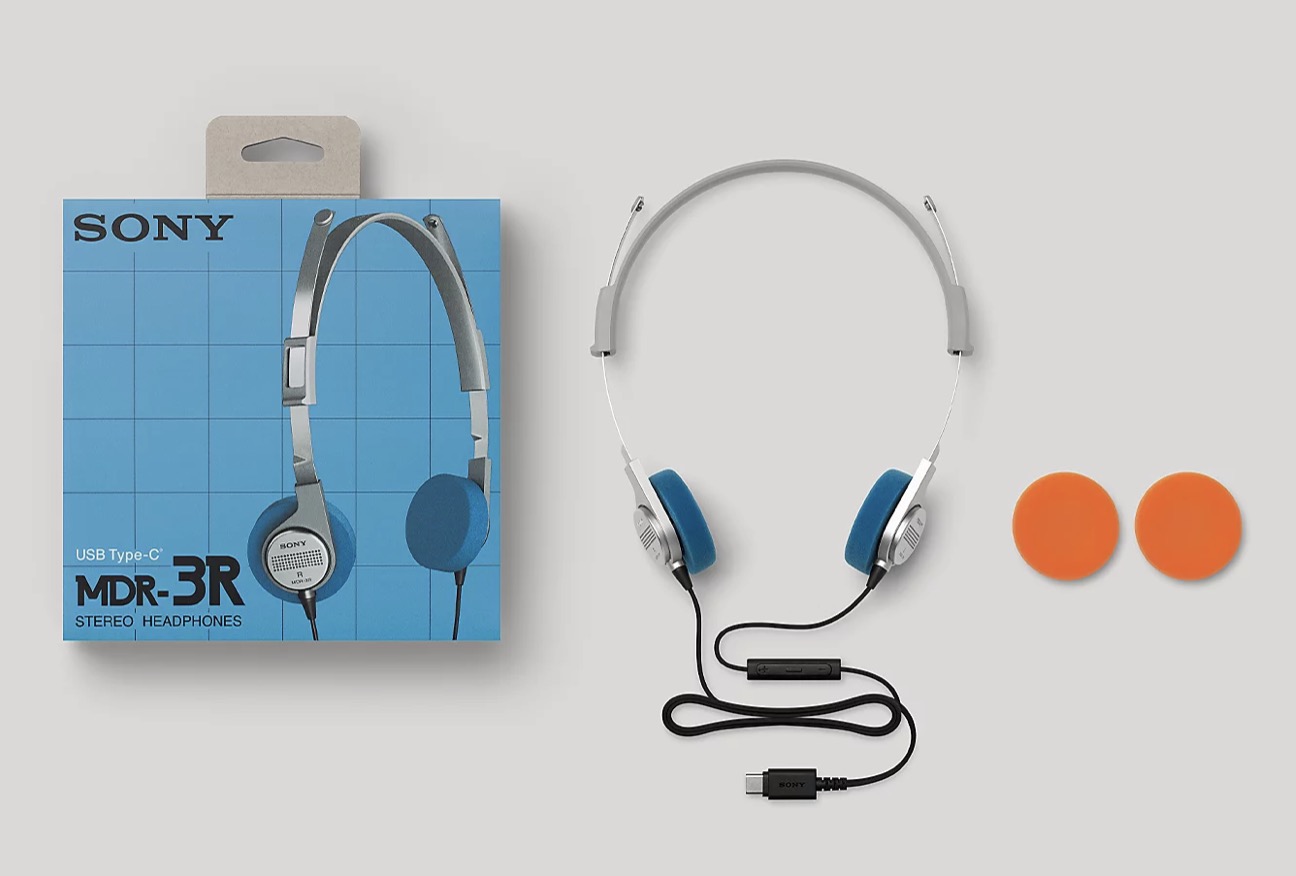
The new MDR-3R stays remarkably close to that original formula. Sony has retained the slim headband and compact earcup structure, while including both orange and blue replacement ear cushions. The result is a design that deliberately recalls the early Walkman era rather than following contemporary headphone styling trends.
The most significant update is connectivity. While wireless headphones dominate much of the current market, Sony has chosen to preserve the wired listening experience, replacing the traditional approach with a USB-C connector. This makes the MDR-3R suitable for modern smartphones, tablets, and computers equipped with USB-C ports.
Sony says the headphones have been redesigned for contemporary use while maintaining the original MDR-3 philosophy of making music portable and accessible.
Audio hardware also reflects the product’s nostalgic direction. The MDR-3R uses the same 23mm driver units found in the original MDR-3, aiming to reproduce a sound character close to that of its predecessor. Rather than introducing an entirely new acoustic platform, Sony appears to have prioritized continuity with the original listening experience.

Initial impressions suggest the headphones deliver clear, bright midrange and treble reproduction, along with good stereo separation. However, listeners looking for powerful bass or more advanced acoustic performance may find the relatively simple driver configuration less suitable for their preferences.
Sony has also added features that were absent from the original model, including an integrated microphone and an in-line remote control. These additions allow users to manage basic playback functions and handle calls without reaching for their connected device.
The absence of noise cancellation remains a limitation, particularly when using the built-in microphone in busy environments. Nevertheless, the MDR-3R is positioned more as a lifestyle and nostalgia product than a high-end headset designed to compete with premium wireless headphones.
Its arrival also reflects renewed interest in wired audio equipment and physical music formats. Some consumers are rediscovering the simplicity of traditional headphones, cassette players, and other products associated with earlier generations of personal technology.
The Walkman brand itself has evolved considerably since its cassette-player origins. Modern Sony Walkman devices are digital music players powered by Android, featuring touchscreen interfaces and support for contemporary audio formats rather than physical cassette tapes.
With the MDR-3R, Sony is bringing back a recognizable piece of its portable audio history while adapting it to today’s devices. Priced at $60, the headphones offer a combination of retro design, wired listening, and USB-C convenience for users who appreciate the original Walkman aesthetic.