



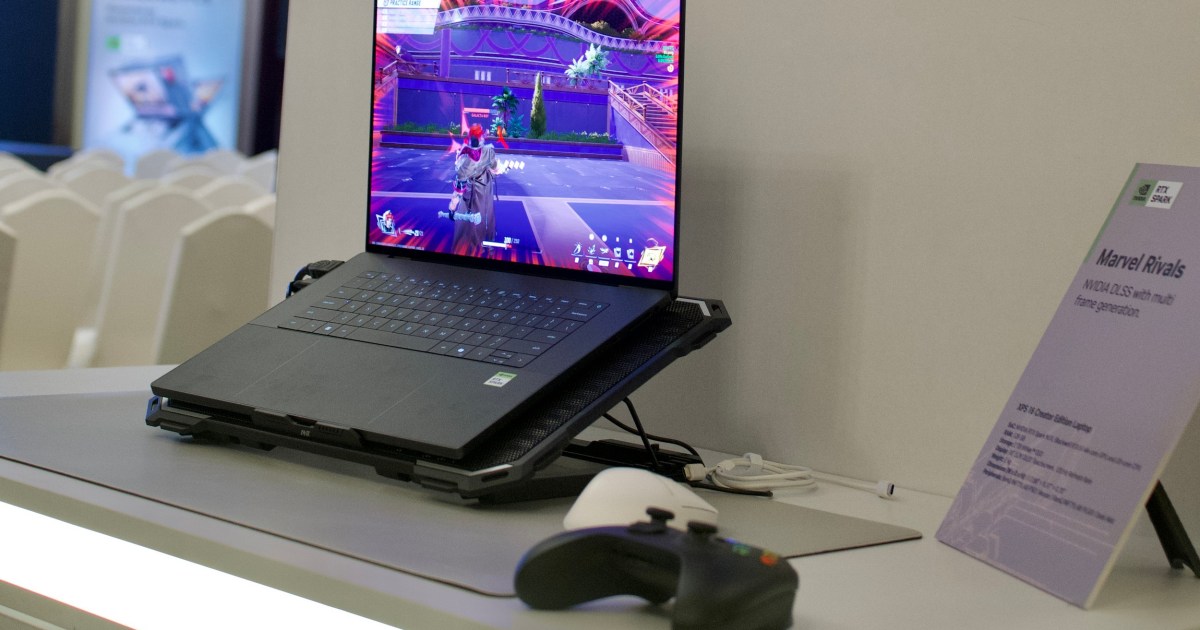
A Dell XPS 16 Creator Edition equipped with Nvidia RTX Spark hit over 180fps in Marvel Rivals using DLSS Quality and 6x Multi Frame Generation, though frame stability was inconsistent.
The test unit featured a 128 GB unified memory configuration, a 20‑core Nvidia Grace CPU co‑developed with MediaTek, and a Blackwell‑based RTX GPU with 6,144 cores. Running Marvel Rivals, the laptop achieved frame rates exceeding 180 fps when DLSS Quality preset and 6× Multi Frame Generation were enabled, while all in‑game graphics options were set to their lowest values.
When the same settings were used without Nvidia’s AI‑upscaling technologies, performance dropped to a range of 55‑65 fps, indicating that the RTX Spark’s DLSS and frame‑generation features contributed the majority of the speed boost. However, the frame rate was not steady; it fluctuated noticeably, which could cause jitter on displays lacking variable refresh rate support.

The reviewer noted that while the laptop’s price is high, consumers might expect more consistent visual fidelity rather than reliance on low graphics settings and AI tricks. The test highlights the trade‑off between raw FPS numbers and stable, smooth gameplay in live‑service esports titles.

TechTimes Commentary
TechTimes notes that Nvidia RTX Spark’s impressive FPS figures stem largely from aggressive AI upscaling and frame‑generation rather than traditional rendering power. This suggests the platform is geared toward workloads that can tolerate lower native settings, which may limit its appeal for gamers seeking high‑detail visuals. The fluctuating frame times also underscore the importance of variable‑refresh‑rate displays to fully exploit the hardware’s potential. As AI‑driven graphics become more prevalent, manufacturers will need to balance headline numbers with consistent user experience, especially for premium laptops targeting esports enthusiasts.