



The RAISE Act will be enforced in New York on Jan 1 2027, obligating large AI developers like OpenAI and Anthropic to register and meet new safety requirements.
RAISE Act enforcement timeline
New York opened a registration portal on Tuesday as it prepares to enforce the RAISE Act at the start of next year. Frontier AI developers with annual revenue above $500 million, including OpenAI and Anthropic, must complete registration by Jan 1 2027. The portal is managed by the Office of Digital Innovation, Governance, Integrity, and Trust (DIGIT). This creates a formal compliance framework for advanced AI models operating in the state.

The law targets “frontier” AI firms—those whose revenue exceeds the $500 million threshold, regardless of location. Under the RAISE Act, they are required to publish safety frameworks on their websites and provide transparent model reports. It represents one of the most comprehensive AI safety statutes in the United States to date.
Registration obligations and penalties
Registered companies must post a detailed safety framework, report any critical safety incident within 72 hours, and issue public model‑transparency reports on a regular basis. Failure to meet these obligations can trigger fines of up to $1 million for a first violation and $3 million for subsequent breaches. DIGIT also retains authority to initiate enforcement actions against firms that do not register.
The penalty structure is designed to exert strong pressure while encouraging proactive risk mitigation. Fines can be levied alongside corrective orders, ensuring that non‑compliant entities address safety gaps promptly. State officials have indicated that compliance will influence future licensing and potential financial incentives.
New Center for AI Responsibility and Research
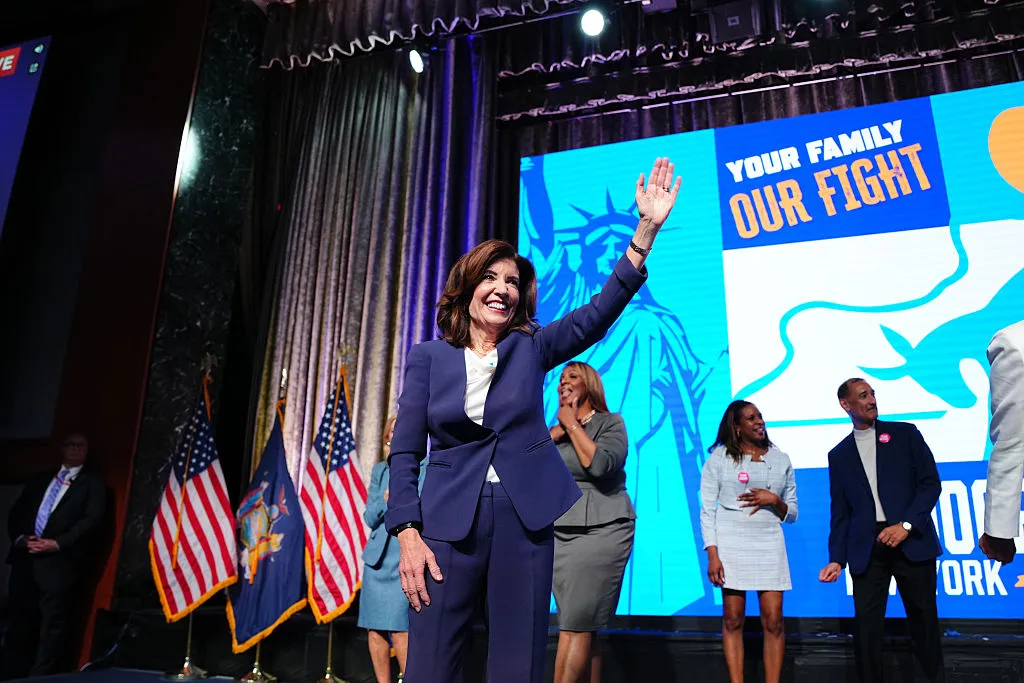
Governor Kathy Hochul announced the New York Center for AI Responsibility and Research, housed at SUNY Binghamton, with $55 million in donations and capital. The center will independently evaluate the safety, security and operational aspects of advanced AI systems and work closely with DIGIT to review companies’ safety frameworks. It aims to establish a national model for sensible AI regulation that puts communities before corporations.
Beyond safety reviews, the center plans to conduct research on AI’s societal impacts and issue policy recommendations. Its launch reflects New York’s long‑term strategy to create transparent regulatory standards while fostering responsible innovation across the AI industry.
State‑level AI regulation landscape
New York joins California, which enacted SB 53 in January, mandating frontier labs to publish safety frameworks, provide whistleblower protections and report critical incidents within 15 days. Illinois will implement SB 315 at the start of 2027, adding independent safety‑compliance audits to the mix. These statutes collectively form a patchwork of state‑driven AI oversight.
Prior to the RAISE Act, New York already required AI chatbot operators to disclose bot status and monitor for suicidal ideation. In October, the governor signed a separate law protecting minors from deceptive, emotionally manipulative chatbot behavior, effective June 1 2027. The expanding regulatory environment signals a tightening of oversight on AI technologies nationwide.
TechTimes analysis
TechTimes believes the RAISE Act marks a pivotal shift toward robust AI governance in the United States. By forcing OpenAI, Anthropic and peers to publish safety frameworks and report incidents swiftly, the law raises compliance costs but also creates a clearer competitive playing field for firms that have already built robust safety processes. High fines and the creation of an independent research center signal New York’s intent to set a national benchmark for responsible AI. The industry will watch how enforcement unfolds, and other states may follow suit, accelerating a broader move toward standardized AI oversight.