



During Adobe Max, Adobe announced four experimental AI tools—Project Screen Test, Project Sight Span, Project Sound Bender and Project Rinse Repeat—to simplify creative editing across media.
New AI prototypes presented at Adobe Max
Adobe used its annual Max conference to demo four AI prototypes, each targeting a different stage of the creative pipeline. The tools are currently in preview mode and are not yet part of any commercial Adobe product. Adobe describes them as “sneaks,” suggesting they may later be integrated into Creative Cloud or the Firefly platform. Their simultaneous reveal signals a broad push into generative AI across visual, video and audio domains.

Adobe has not guaranteed that any of the prototypes will become shipped features, and no release dates were announced. The projects are built on the company’s generative‑AI research, so they could evolve as the technology matures. Creators interested in the capabilities can follow Adobe’s updates, but should treat the demos as experimental concepts rather than finished tools.
Project Screen Test and Project Sound Bender
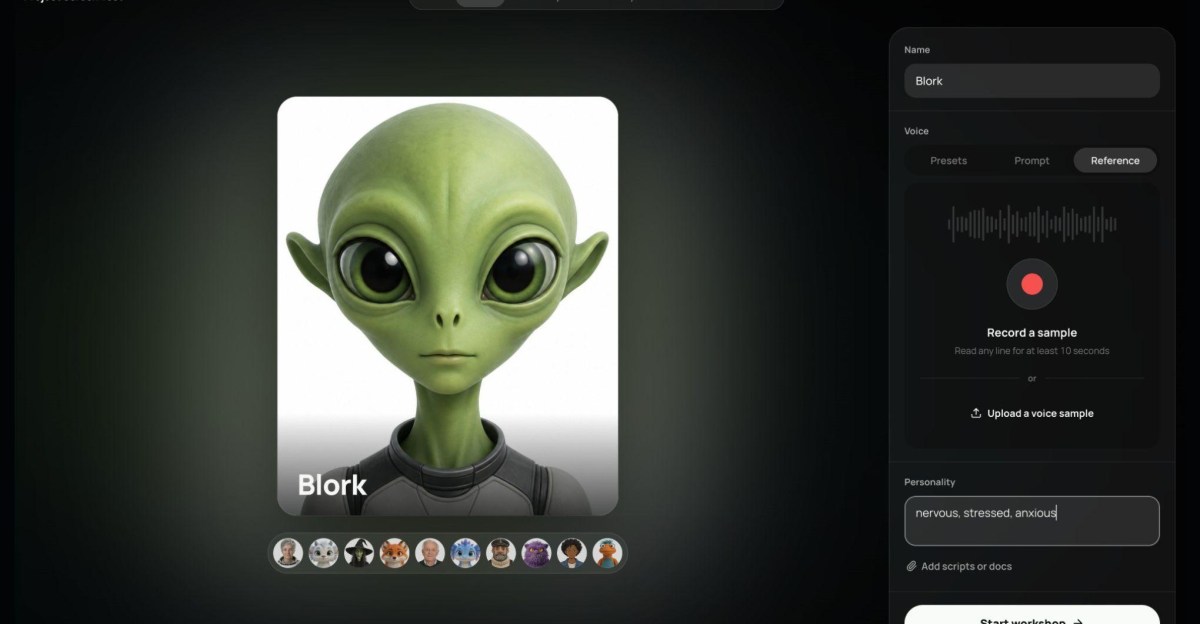
Project Screen Test lets users shape AI‑generated characters by conversing with them instead of relying solely on text prompts. Users define personality traits, upload or select a voice, and then hold a dialogue that refines backstory, quirks and goals. Once satisfied, the system can render short animated screen tests set in user‑described scenes. The prototype currently exists as a standalone creative exercise and is not yet tied to Adobe’s video‑editing suite.
Project Sound Bender is an AI‑driven audio‑mixing tool that generates sound effects from textual descriptions. After a video clip is uploaded, a prompt such as “bubbling sci‑fi cauldron noises” produces a palette of AI‑generated sounds mapped to a four‑corner canvas. Users can drag the cursor across the canvas to emphasize particular textures, while the system automatically synchronises the effects with the video timeline.
Project Sight Span and Project Rinse Repeat
Project Sight Span converts any flat image—photo, painting or illustration—into a navigable 3D environment. The AI extrapolates background elements beyond the original frame, allowing users to move around and view the scene from new angles. When a new perspective is chosen, the system restores resolution, preserving details such as tattoos or facial features that remain recognisable.
Project Rinse Repeat, built into Photoshop, copies edits made to one subject and automatically applies them to other similar subjects in the same image. Whether removing blemishes or adding product shadows, the replicated changes stay editable because they are recreated with native Photoshop tools. This approach aims to speed up repetitive retouching tasks while keeping full creative control.
TechTimes analysis
TechTimes believes Adobe Max’s showcase of four AI prototypes underscores the company’s commitment to embedding generative AI throughout its Creative Cloud ecosystem. If any of these experiments mature into production tools, they could dramatically cut the time and cost of image, video and audio production, while giving seasoned creators more precise, intuitive control. The ultimate impact will depend on how Adobe integrates the technology, the response from professional users, and whether the tools can meet the high‑quality standards expected in commercial workflows.